

























































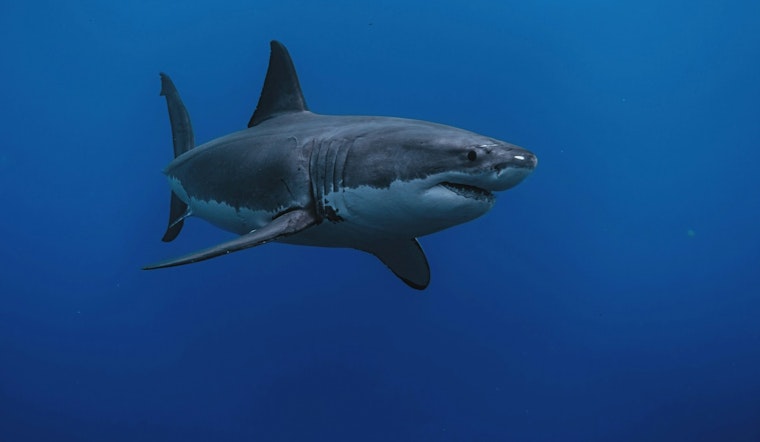
Florida's coastal waters have become a canvas for a massive great white shark known for leaving its mark in the form of a "self-portrait" on the trackers of OCEARCH, a non-profit organization dedicated to studying marine life. The 13-foot, 3-inch, 1,437-pound shark, aptly named Breton, was traced near Juno Beach right after the conclusion of Discovery Channel's 'Shark Week,' according to information from a Palm Beach Post report.
Breton's unusual presence in Florida waters this summer has intrigued many, given that great white sharks typically migrate north during these months to feast on rich prey like seals before returning to the warmer waters in the south during winter, a behavior highlighted in an OCEARCH study, the movements of Breton, a well-traveled great white, suggest a deviation from this pattern as it pinged off Florida's coast despite having previously traveled as far north as Newfoundland and frequently visiting North Carolina's coast, a noted mating ground for great whites. This unexpected journey south also brought Breton to the attention of beach-goers in Port St. Lucie on July 3 and then to Juno Beach on July 15, as CBS12 outlined.
OCEARCH, recognized for its extensive research on marine giants, has tracked 371 sharks, including 123 great white sharks, among various other keystone species that play a pivotal role in marine ecosystems. Breton, initially tagged in 2020, has since been traveling extensively across the Atlantic, detailed by its dorsal fin satellite tag that pings location data upon surfacing. OCEARCH's founder Chris Fischer explained the organization's mission to understand and preserve the life of white sharks in global waters, saying, "If we lose the apex predator (sharks) then we lose all our fish and then there are no fish sandwiches for our grandchildren," a sentiment that underscores the critical nature of their work reported by Palm Beach Post.
One intriguing aspect of Breton's tracking information is the "self-portrait"—a pattern traced by the shark's migratory route resembling its own massive form, an outline that stretches from Nova Scotia's tail, through the Eastern Seaboard, and with a head pointing towards Florida's coast which can be seen on the OCEARCH Global Shark Tracker. For those interested in following Breton's movements or learning more about the marine life studied by OCEARCH, updates and tracking details are continuously shared on the organization's website and were also documented by CBS12. As our coasts draw fleeting visits from these ocean travelers, the data gathered not only provides insight into the mysterious lives of these marine creatures but also reminds us of the interconnected nature of our ecosystems and our role in their preservation.





