

























































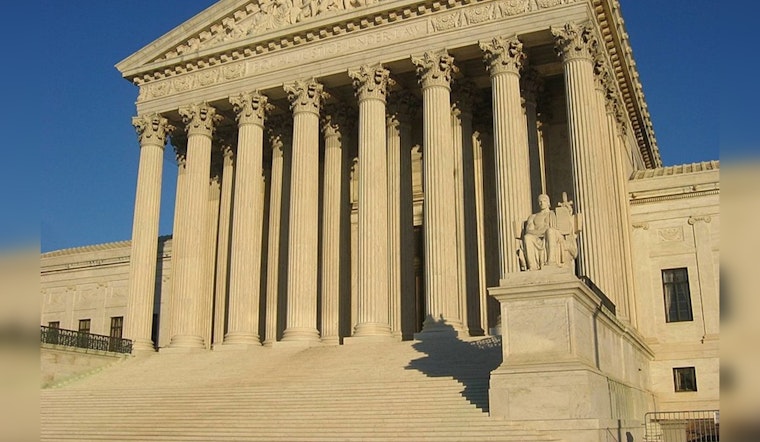
In a series of rulings that shake the core of environmental regulation, the U.S. Supreme Court has delivered judgments that constrain the reach of the EPA and significantly limit the scope of the Clean Water Act. As reported by the Chicago Tribune, this came in the aftermath of another decision last month deeming federal agency powers too broad, dubbed the Loper decision. This precedent challenges the previously established Chevron doctrine, which had allowed agencies latitude in interpreting ambiguous statutes, a practice now curbed by the high court.
Now, environmentalists, and specifically those in Chicago's Southeast Side, intend to quickly adapt, aiming to use these decisions as leverage. An opportunity, as Howard Learner, Executive Director of the Environmental Law and Policy Center, noted to the Chicago Tribune, "to turn lemons into lemonade.” The center represents community organizations in a lawsuit against the U.S. Army Corps of Engineers regarding the handling of a toxic sediment dumping site along the Lake Michigan shoreline. The plaintiffs argue that the agency has not adequately assessed environmental risks, including those stated in the Clean Water Act and National Environmental Policy Act, before deciding to expand the site.
These Supreme Court rulings are not without controversy. As detailed by NPR, one recent decision narrows the CWA, effectively limiting the definition of "navigable waters" to exclude many wetlands that were previously protected. Justice Samuel Alito, writing for the majority, contended that the EPA's jurisdiction should only cover large bodies of water and adjacent wetlands with a "continuous surface connection to those bodies," a standpoint at odds with past presidential administrations' readings of the statute.
Oral arguments are slated for 12:30 p.m. on August 28 at the Dirksen U.S. Courthouse, as per the Chicago Tribune.





