

























































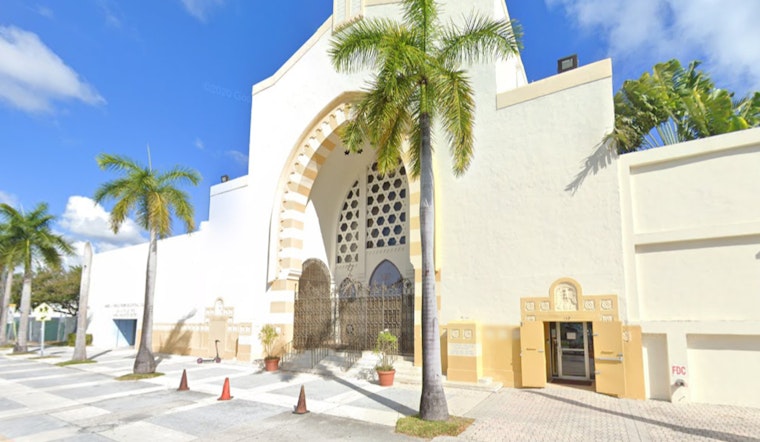
Temple Israel of Greater Miami, one of the oldest Jewish synagogues in South Florida with a rich history extending back to the 1920s, has announced plans to shutter its current facility by next summer. According to NBC6, the decision comes as the result of financial constraints, making the upkeep of the synagogue's large 64,000-square-foot building unsustainable.
Shari Debowsky, executive director of Temple Israel, told The Miami Herald, "Temple Israel of Greater Miami has a huge history…we’re in our 103rd year, but it is almost impossible to operate a 64,000-square-foot building with a small congregation of our size." The current membership stands at approximately 130 families, which starkly contrasts with the 1,800 families that were members during its heyday in the 1960s. This decline in membership has made it financially infeasible to maintain the property long term, prompting the temple to actively seek to eventually transition out of the facility.
Despite the impending closure, temple leaders have been focused on ensuring that services and activities can continue without disruption until next summer. According to NBC6, a task force has been formed to deliberate on the congregation's future and explore different options for relocation. They are also inviting ideas from the wider community as they navigate this period of change.
Temple Israel has played an integral role in the religious and social life of Miami, hosting countless bar and bat mitzvahs, weddings, and other communal events. The synagogue has a deep history of inclusion, particularly within the LGBTQ community. In an interview with The Miami Herald, leaders highlighted that Rabbi Amy Morrison, who is a lesbian, was appointed senior rabbi in 2019, emphasizing the congregation's welcoming nature.
The final decision on where the congregation will relocate and the fate of the current property remains undecided. However, Debowsky emphasized to The Miami Herald that this period signifies "this is not doom and gloom. This is an opportunity for us to create something amazing, just the next iteration of Temple Israel," effectively confirming the intention for the congregation's legacy to persevere despite the physical transition.





