

























































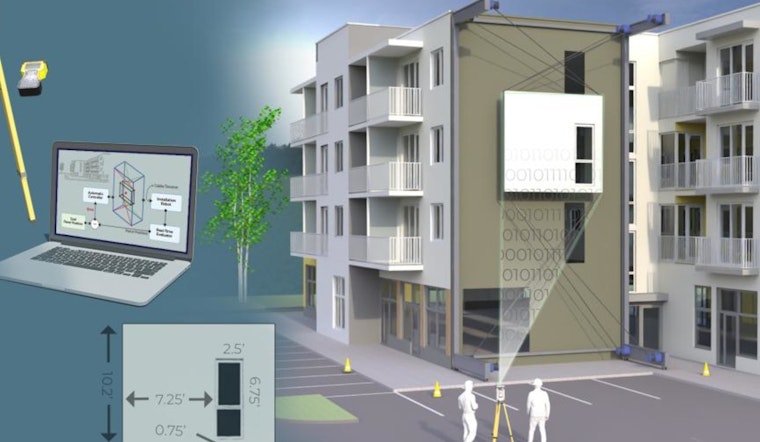
Oak Ridge National Laboratory is shaping the future of construction with a new digital platform, PATH, designed to streamline and automate the retrofitting of buildings suffering from poor thermal insulation—a condition affecting roughly 50 million buildings across the U.S., according to recent developments. Inefficient structures contribute to excess carbon emissions and inflated utility costs, and the platform, being developed by the national lab, aims to address this by modernizing the retrofit process from initial design right through to the installation.
Traditionally, upgrading a building's insulation has been a manual and time-consuming task, often involving the painstaking process of fitting new insulated walls over existing ones, a task that can lead to misalignment and consequential expenses, thanks to PATH, this could be a thing of the past. The platform begins by creating a digital twin or virtual model of the challenged building, using algorithms developed at ORNL; these digital schematics are then paired with the lab's real-time building evaluator tool, ensuring precise measurements and ultimately, an airtight installation of the retrofit panels.
The key to PATH's innovation lies in its cable-driven robotic crane, which is designed to autonomously install panels on a variety of construction sites. According to a statement obtained by ORNL, Bryan Maldonado of the lab elucidates the impact of this technology by saying, "By designing a robot that can autonomously install panels on a variety of construction sites for mass assembly, we’re making the retrofit process fully automated from start to finish." Such automation not only slashes costs but is also expected to hasten the overall retrofitting procedure potentially by a factor of five.
This advancement in construction technology marks a significant milestone for the industry, not only for its potential in reducing labor and resource consumption but also in combatting the ongoing environmental crisis posed by existing infrastructures. The digital and robotic elements of PATH work hand in hand to ensure an effective resolution to an otherwise arduous and often error-prone manual process the anticipated demonstrations of the robotic capabilities are set within the coming year, with hopes for field deployment to follow soon thereafter, a move that transformers could enhance efficiency in the construction sector and accelerate efforts towards greener living conditions for millions.



