

























































As the digital landscape continues to evolve, researchers at the Department of Energy's Oak Ridge National Laboratory (ORNL) are examining the combination of two powerful forms of computing technology. In an article published by ORNL, scientists discuss marrying quantum computing with classical high-performance computing (HPC) to advance scientific research. One of their goals is to overcome the limitations of current computing when it comes to complex scientific problems.
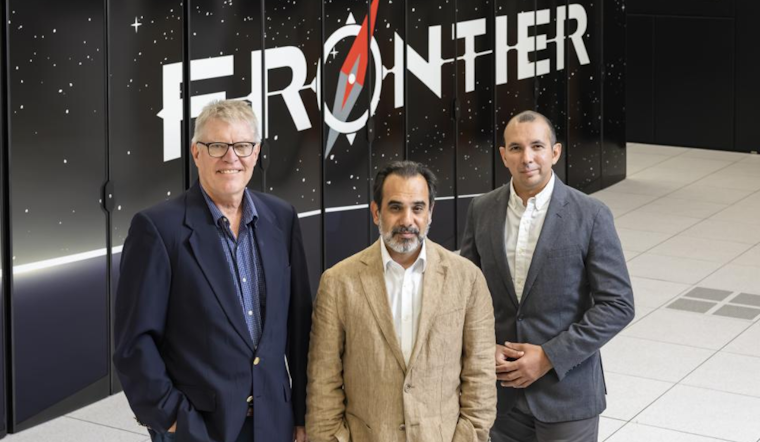
Quantum computing, while in its relative infancy, has the potential to process information in ways that classical computers simply can't handle. ORNL's work, including developing Frontier, the world's fastest supercomputer, positions them at the forefront of these technological advances. "It's kind of a manifesto for how we propose to dive as a laboratory into this new era of computing," said Rafael Ferreira da Silva, a researcher at ORNL's National Center for Computational Sciences, per the Oak Ridge National Laboratory. The intent isn't to find the only right way but rather a flexible strategy that can evolve with the technology.
The study, featured in Future Generation Computing Systems, aims to harness the unique properties of quantum mechanics to handle computational challenges unmanageable by traditional means. "We encounter certain problems in science in which electrons, for example, are coupled between atoms in ways that grow exponentially when we try to model them on a classical computer," Tom Beck, the study's lead author, said, as cited by the Oak Ridge National Laboratory. With classical machines struggling with such complexity, the potential for quantum computing to change the game is significant.
Still, the quantum world remains fraught with challenges, including high error rates and unsettled technology for qubit encoding. The study proposes an integrated approach, setting up quantum test beds with classical machines to explore these nascent technologies. According to the Oak Ridge National Laboratory, Sarp Oral, who heads the NCCS Advanced Technologies Section, said this integration, while non-ideal at this stage, is a crucial step towards identifying algorithms that can benefit from quantum acceleration, "Our job is to provide better ways to conduct science, and quantum computing can be a tool that serves that purpose."
Elaborating on the study's proposed frameworks, Beck envisions a seamless connection between classical and quantum systems, akin to the hybrid architecture of GPUs and CPUs in today's supercomputers. While this level of integration remains a work in progress, a high-speed network is recommended as the best way to connect classical HPC resources with quantum computers.



