

























































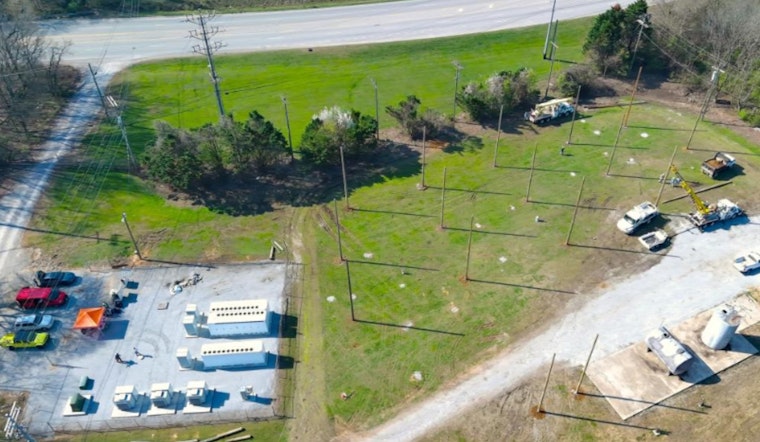
In a recent development from the Department of Energy’s Oak Ridge National Laboratory (ORNL), drones have taken to the skies to safeguard the health of our electric grid. ORNL researchers showcased a new system that harnesses drones for rapid, autonomous inspection of power lines, potentially detecting issues leading to outages before they occur, as reported by ORNL. The demonstration, conducted at EPB of Chattanooga's training facility, highlighted the agility and precision of drone technology in monitoring electric grid infrastructure, especially in remote, difficult-to-reach areas.
According to the ORNL announcement, the process is initiated by sensors mounted on power lines that detect anomalies in current or voltage, triggering a networked drone to assess the situation using video, acoustic sensors, and other diagnostic tools. By live-streaming data to command centers, drones enable rapid response to potential issues, doing so with greater speed than traditional manual inspections, and Jim Glass, the assistant vice president of Smart Grid Operations for EPB, recognizes the value in early detection, expressing the system's benefits in preventing outages and reducing costs; "The biggest opportunity is identifying imminent equipment failure," Glass told ORNL, "Just as with your health, if you catch problems early, you can correct them with less expense and difficulty. Proactively addressing problems before customers experience outages provides tremendous benefit."
The Autonomous Intelligent Measurement Sensors and Systems Project (AIMS), funded through DOE’s Office of Electricity, underpins this initiative, blending commercial drones and sensors with novel technology developed by ORNL. Peter Fuhr, who leads the Grid Sensing and Communications group at ORNL, emphasized the system's uniqueness in the utility sector by stitching together multiple components into an integrated system, which is customized to meet the operational demands of utilities, according to ORNL’s release.
The underlying technology includes an advanced sensor designed by ORNL that offers a cost-effective alternative to expensive commercial options, enhancing the economic feasibility of widespread implementation for utilities, for example, EPB plans implementation across its substations with ORNL identifying affordable drone options, which could serve as a cost-effective alternative to sending line workers out on calls, and with ORNL outlining a strategy where different drones with specialized sensors could be on standby for immediate deployment across EPB's substantial service area
ORNL is improving drone technology to process data closer to where it’s collected, which helps save battery life and keeps communications secure. They’re using advanced quantum encryption to protect data from unauthorized access. .



