

























































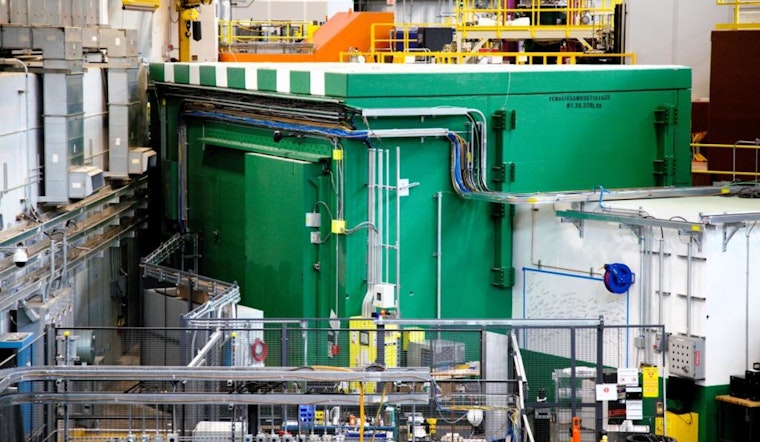
Oak Ridge National Laboratory (ORNL) in Tennessee has delivered a new promise to the field of atomic-scale 3D imaging with the introduction of VENUS, a cutting-edge neutron imaging instrument, as reported by ORNL. Funded by the Department of Energy (DOE), VENUS, or Versatile Neutron Imaging Instrument, represents the nexus of neutron scattering technology and artificial intelligence, poising to accelerate research and analysis across an array of scientific disciplines.
In a statement provided by ORNL, Hassina Bilheux, a neutron scattering scientist integral to the project, expressed her emotional investment, "It's a dream come true," noting the collective effort that saw VENUS to fruition; this piece of technology is available for international users and proposes to leave a mark in various research areas, such as energy storage aiming for better batteries, materials science for more efficient building resources, plant biology for the development of drought-tolerant plants, and much more, all while fostering the United States' emerging leadership role in neutron imaging.
One significant benefit of VENUS is its nondestructive approach to studying delicate materials like the moon rocks investigated on the MARS beamline at ORNL's High Flux Isotope Reactor (HFIR), as reported by ORNL. This is particularly noteworthy because neutron beams can probe materials without altering their intrinsic properties, poised to help decipher cosmic mysteries like early planetary formations and water sources on the moon by analyzing mineral content within such samples. Through its pulse neutron beams, touted as the world's most intense, VENUS enables detailed 3D imaging without inflicting damage to the examined specimens.
VENUS will also feature AI-driven methodologies that maximize the utility of neutron beam time, enabling researchers to glean 3D models from their experiments swiftly; with AI, data can be transformed into three-dimensional visuals almost immediately as an experiment concludes, thus reducing the wait time for critical data from days or weeks to the duration of the experiment itself. Jens Dilling, associate laboratory director for ORNL’s Neutron Sciences Directorate, highlighted this capability in an ORNL announcement, "We are thrilled to offer such one-of-a-kind capabilities to user communities around the globe," emphasizing the role of science and committed individuals in tackling global and national challenges.
The development of VENUS, traced back to an original concept in 2006, was a monumental endeavor that sustained momentum even through the pandemic; its construction began in 2019 and is now nearing completion, with user beamtime expected to start in the latter half of 2025. Collaborative efforts, including those with Brookhaven National Laboratory and Purdue University, created the sophisticated algorithms that underpin VENUS's AI, a testament to the interdisciplinary synergy instrumental in the imaging beamline's development, furthering ORNL's commitment to addressing pressing scientific challenges as a DOE Office of Science user facility managed by UT-Battelle.



