

























































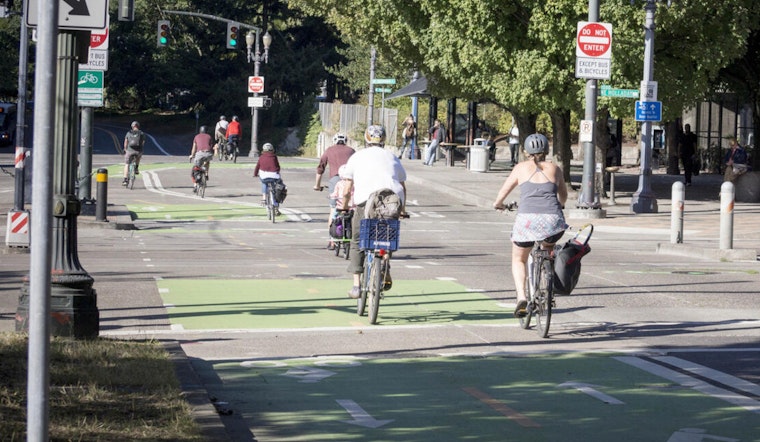
The City of Portland is on the verge of a substantial shift in cycling infrastructure, as the Portland Bureau of Transportation (PBOT) sets its sights on enhancing the safety and permanence of bike lanes by replacing the existing plastic posts with concrete barriers. According to reports from Bike Portland, the PBOT Bicycle Advisory Committee convened on Tuesday, laying out plans for "hardening" approximately 20.5 miles of bike lanes, an endeavor that brings to fruition the long-standing calls for sturdier segregation between cyclists and motorized vehicles.
Amid concerns over the effectiveness of the current delineator posts, PBOT has initiated a five-year upgrade timeline with a budget of about $500,000 annually—money that will pave the way, literally, for eight miles of concrete-defended bike thoroughfares, as per KOIN News. Northwest Naito, stretching from Davis to Hoyt, is slated to be one of the premier locations for this upgrade, but with the acknowledgement that a heftier barrier could spur more mindful driving habits near these zones.
Speaking to the enhanced safety that comes with the visual and physical authority of concrete, PBOT spokesperson Dylan Rivera shared with KATU News, "We think people are driving near these protected bike lanes may take the harder materials more seriously and take extra care to avoid crashing into that barrier." The move appears to be a direct response to the concern for cyclists' protection, responding to a demand that has gained volume over time, transitioning from mere discourse to implemented strategy.
Furthermore, at the recent Bicycle Advisory Committee meeting, Roger Geller, the City Bicycle Coordinator, highlighted the evolution of the city's approach to bicycling infrastructure, noting that "this is something a lot of folks have been asking for," which he announced even with the PEBOT's historic tendency to rely predominately on paint and plastic-only protected bike lanes, the organization is now throwing full weight behind making said lanes more robust and permanent—without a continuous place-holder but a tangible, concrete commitment to cyclist safety and bike lane integrity, as reported by Bike Portland.





