

























































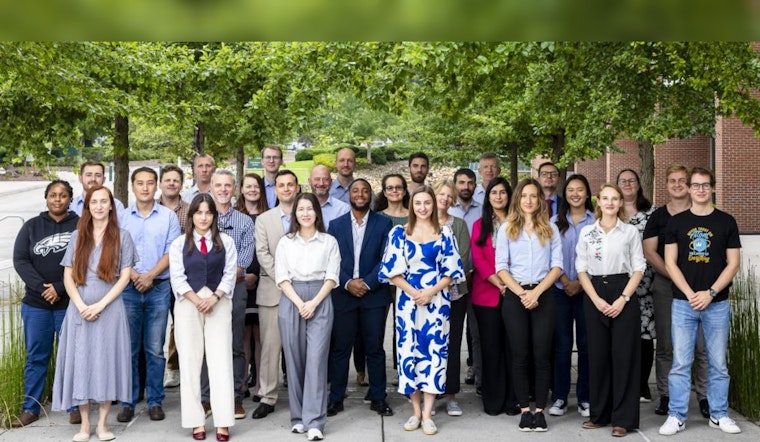
It's not every day that upcoming international leaders in the nuclear sector unite under a single roof, but that's precisely what occurred at the Oak Ridge National Laboratory (ORNL) this year for the Nuclear Energy Management School (NEM). Coming from the International Atomic Energy Agency (IAEA) member countries, 29 young professionals including Tetiana Maltseva from Ukraine, took part in an exhaustive program aimed at enhancing both their managerial and technical skills. Maltseva told ORNL News, "I am here for career development, to expand my knowledge, and to get acquainted with other nuclear professionals."
The annual program, supported by the Department of Energy, capitalizes on ORNL’s longstanding prowess in nuclear research to forge the future's nuclear leaders. According to a statement by Andrew Worrall, director of Nuclear Energy Programs at ORNL’s Nuclear Energy and Fuel Cycle Division, “Hosting NEM is a testament to ORNL’s overarching mission to deploy clean energy solutions with global security at the front of mind.” The two-week program's curriculum tackles an array of topics including nuclear licensing and regulation, safety culture, and the applications of nuclear technology.
Diversity is at the heart of NEM, with a rich tapestry of backgrounds merging to create a dynamic learning environment. “The big advantage of NEM is the variety of backgrounds represented and topics covered,” stated Maltseva in a discussion with ORNL News. Across the Atlantic, Aleksandra Brzózka from Poland echoed these sentiments, acknowledging the program's comprehensive syllabus and the importance of networking for sharing insights on nuclear power across countries.
Not limited to lectures, NEM also provided students like Elisa De Siati of Italy, with tangible experiences at ORNL's High Flux Isotope Reactor and potential future sites like the Clinch River Site, earmarked for small modular reactors. De Siati found her opportunity to turn the complexities of nuclear energy into accessible and practical knowledge particularly illuminating. "For me, nuclear energy has always been abstract," De Siati told ORNL News. "It is highly technical but integrated into so many other fields, making it accessible to anyone who wants to be a future agent of change."
The NEM program's conclusion saw participants presenting group projects that addressed multifaceted issues surrounding nuclear energy. Worrall emphasized the need to appreciate the diversity of elements involved in the decision-making process for nuclear energy and the importance of understanding different priorities. In light of the current geopolitical climate, the skills and connections garnered at NEM could prove pivotal for countries striving for energy independence, such as Ukraine, reflected by Maltseva's commitment to enhancing her home country's research capabilities to foster energy independence.



