

























































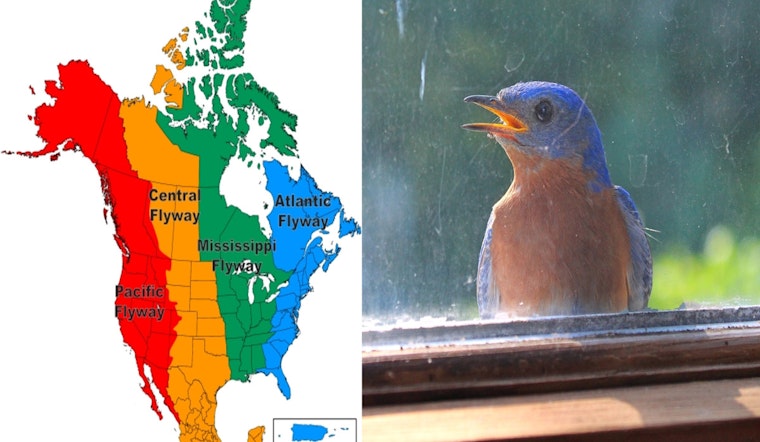
As summer fades into the rearview, Minnetonka residents are on the brink of fall with days rapidly shrinking; we're losing daylight to the tune of 2.3 minutes daily since June's solstice, which means come the end of September there's nearly four hours less of sunlight, a natural progression that leads to increased use of artificial light in homes, streets and backyards—a necessity for us perhaps, but it's proving to be a hazard to wildlife, especially migrating birds, as per the City of Minnetonka.
According to the City of Minnetonka's latest post, the area plays host to an aerial highway for over 250 bird species traveling the Mississippi Flyway during migration seasons, which is essential for linking breeding and overwintering sites across the Americas, yet our penchant for artificial lighting is causing a ruckus amid this natural phenomenon.
However, there appears to be a feasible roadmap to coexistence that benefits both wildlife and our pockets. Small tweaks to lighting on properties can reduce the negative impacts, this isn't just good for the birds and the bees, it can trim down the utility bills and the production of greenhouse gases, it's a win-win scenario thus Minnetonka officials are suggesting residents to adopt things like motion-sensitive lights, ensuring exterior lights are shielded and oriented properly, and darkening our living spaces during peak migration times, from August 15 to October 31 in the fall, and mid-March to late May in the spring, as well as spreading the word on these small but significant changes, including taking the "Lights Out Minnesota" pledge from Audubon Minnesota, as detailed by the City of Minnetonka.





