

























































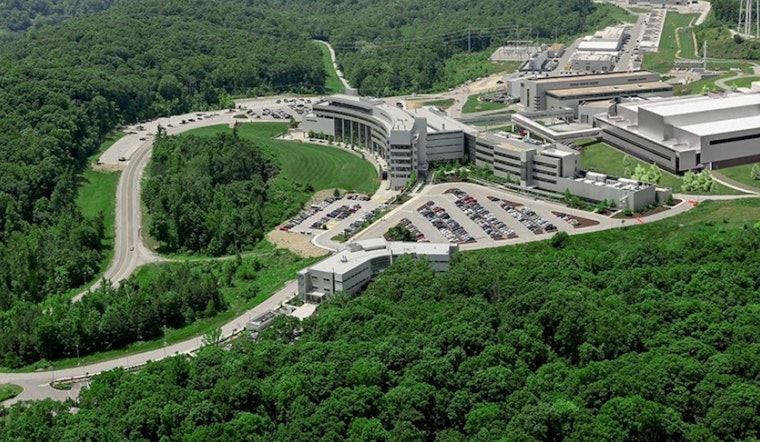
Oak Ridge National Laboratory's Spallation Neutron Source (SNS) has been rebooted following a significant series of upgrades, which included the installation of seven additional cryogenic modules with 28 new power units. The enhancements to the facility's 362-yard-long linear accelerator complex, or linac, are expected to deliver substantial benefits to research by drastically increasing its power capabilities. According to an ORNL report, the project finished both ahead of schedule and under budget, positioning the SNS to provide up to about 40% more power than its original 1.4 megawatts.
John Galambos, the project director who recently retired after more than four decades at the lab, quipped on the delicate process of ramping up the facility, saying, "It was an A-team effort that will benefit science and technology development for decades to come." The newly empowered linac is poised to not only boost the First Target Station but to also eventually power the SNS's Second Target Station, destined to be the world's brightest source of "cold" neutrons, as reported by ORNL. Despite the global pandemic and supply chain challenges, the ORNL team managed to swiftly and efficiently execute the Proton Power Upgrade (PPU) project, to quickly enhance scientific discovery in a variety of fields.
Neutrons play a crucial role in a wide array of research endeavors, from vaccine development to the operation of national security systems. The upgrades to the SNS will amplify this, supporting the U.S. economy and innovation in vital sectors such as energy and biotechnology. Jens Dilling, associate laboratory director for the Neutron Science Directorate, praised the project's success, telling ORNL, "The PPU project exceeded all expectations in how it’s come together nearly three years ahead of schedule despite enormous technological, logistical and even global health challenges."
With the completed configuration, the SNS is now expected to produce peak outputs as high as 2.0 megawatts, a threshold that should, in theory, be achievable by fiscal year 2027. Mark Champion, the new PPU project director, signaled the team's intent to not rest but to continue pushing the technological envelope. "We want to acknowledge and thank the project team for all of their hard work and dedication," he pronounced in an official ORNL statement. Jon Taylor, division director for ORNL’s Neutron Scattering Division, also indicated that the scientists have already benefited from the record 1.7 megawatts enabled by the PPU project in 2023, eagerly anticipating the full 2.0 megawatts capacity.
The improvements at SNS aren't merely about power. The facility's linac uses electromagnetic fields to accelerate protons up to around 90% of the speed of light. The first section operates at room temperature, while the rest of the linac utilizes superconducting cavities kept at two degrees above absolute zero, using liquid helium. The renovations have also involved significant architectural changes, as the team constructed a curved extension tunnel, adding roughly 3,000 square feet of concrete and a wall of over 7,000 blocks for radiation shielding.
Commissioning for routine operations followed swiftly after a closure that concluded in April 2024, with authorization granted in early June and commissioning completed in under 30 days. The successful resumption of operations at SNS underscores a landmark phase for the DOE Office of Science user facilities managed by UT-Battelle, demonstrating a commitment to facing some of the most pressing scientific challenges of our time.



