

























































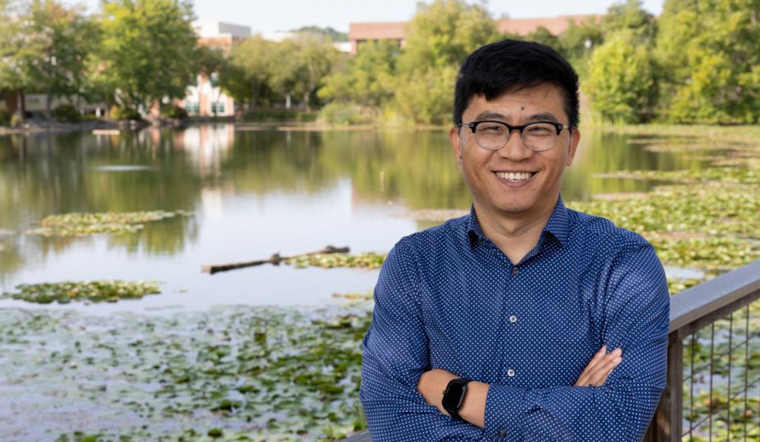
In addressing the rapid changes in the Arctic ecosystem, scientist Daryl Yang is utilizing his expertise in science and engineering to pioneer methods that enhance our understanding of this evolving landscape. As reported by Oak Ridge National Laboratory, Yang's work involves deploying a variety of remote sensing technologies through the Next-Generation Ecosystem Experiments in the Arctic project, or NGEE Arctic. These technologies span from satellite imagery to drones and ground sensors to collect data across different scales in the Alaskan tundra.
The significance of Yang's efforts can be observed as the Arctic endures nearly four times the rate of warming compared to other regions on the planet, leading to permafrost thaw and a host of other environmental challenges. ORNL's Liane B. Russell Distinguished Staff Fellow, Yang captures nuanced ecological shifts, such as the emergence of thermokarst from thawing permafrost, and vegetation changes that not only affect the native landscape but also the release of greenhouse gases long trapped in the soil.
An ORNL article highlights Yang's advancement in integrating machine learning with this array of data to improve land models used in the Energy Exascale Earth System Model. This assists researchers in predicting future climatic impacts. Beyond this, Yang's fellowship project explores the increasing occurrence and extent of wildfires across the Arctic and boreal ecosystems, attempting to discern fire's influence on both energy and carbon cycles within these harsh environments.
The urgency of Yang's research is underscored by the transformation of the Arctic environment; as he told ORNL, "As the permafrost melts, it is fundamentally changing everything. Changes to the terrain, the emergence of new vegetation and changes in the life cycle of existing vegetation – these are all very important to the people and the animals who live in the Arctic". These developments garner a heightened significance given the potential for expansive impact on both local and global scales.
Yang's connection with the environment, tracing back to his childhood in the Shandong Province of China, nurtured his foundational interests in plant ecosystems. His academic pursuits carried him from Central South University to Beijing Normal University, and eventually to the United States, where he studied at Stony Brook University, in New York. His tenure included 18 months as a NASA Fellow and engagement with NGEE Arctic, which solidified his position at the forefront of ecological and remote sensing research.



