

























































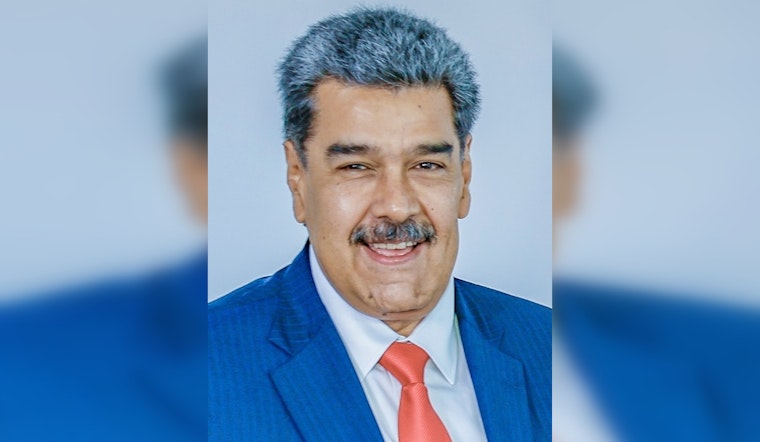
Authorities made a significant move today as they seized a plane regularly used by Venezuelan President Nicolás Maduro. This action, confirmed by Homeland Security Investigations, follows the controversial Venezuelan election and ensuing protests after Maduro claimed victory. As NBC6 reported, the aircraft touched down at Fort Lauderdale-Hollywood International Airport, drawing considerable attention from federal agents and the international community.
The background of the plane's movements showed it previously leaving from the Dominican Republic, aligning with public records of ownership changes and prior destinations which included St. Vincent and the Grenadines, Cuba, and Brazil. The plane, a Dassault Falcon 900EX, sports a registration from the tiny European republic of San Marino, identifiable by its T7 prefix. The U.S. Federal Aviation Administration canceled its registration in January due to exportation to St. Vincent and the Grenadines, with subsequent questions arising about a potential breach in American sanctions on Venezuela.
This seizure signifies the growing tensions and the U.S. response to perceived wrongdoings by the Maduro administration, including allegations of fraudulent election results. Documents pointed to a swift transfer of the plane to San Marino, a maneuver that has raised eyebrows regarding its legality under U.S sanctions. The enforcement action was a collaborative effort from departments of Homeland Security, Justice, and Commerce, hunting potential violations in a sea of international sanctions and restrictions. According to the Miami Herald, federal authorities consider this a latest step in applying pressure on the Venezuelan government.
Earlier this year, another aircraft, a Boeing 747-300M, connected with Iranian company Mahan Air and subsequently sold to a Venezuelan firm, was also seized. Mahan Air, long-targeted by U.S. sanctions for its affiliations with Iran's Islamic Revolutionary Guard Corps-Quds Force, saw the aircraft intercepted and retained in Miami, further illustrating the United States' firm stance on enforcing sanctions and export control laws. The political stage sets a complex scene of global chess where planes become pawns and governments, the enigmatic players.
The wider implications of these actions are notable, with Homeland Security Investigations' and U.S. Attorney’s Office in South Florida's efforts yielding seizures in excess of half a billion dollars, including assets from Venezuelan officials embroiled in corruption schemes. From luxury real estate to a super-yacht, the list of seized properties and goods paints a stark portrait of efforts to curb corruption linked to Venezuela's state-owned oil company, PDVSA. These individuals, as told by federal authorities, laundered funds into financial systems at an international scale, though a few remain under trial or have passed while under indictment.





.jpg)