

























































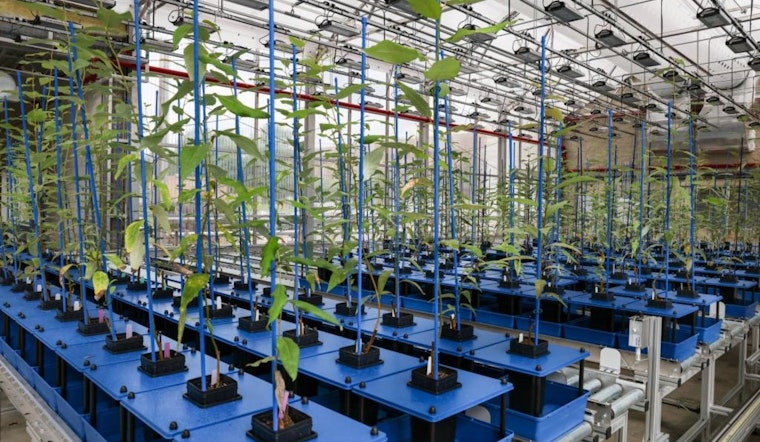
At the Department of Energy's Oak Ridge National Laboratory, advances in plant science are blossoming thanks to the integration of robotics, artificial intelligence (AI), and now, a peek into the underground life of plants. The Advanced Plant Phenotyping Laboratory (APPL) serves as a high-tech arboretum where plant growth, genetics, and responses to environmental factors are dissected with state-of-the-art equipment and computational analyses. According to Oak Ridge National Laboratory News, Larry York, an ORNL senior staff scientist, said that APPL uses a robotic greenhouse system, providing insights into photosynthesis efficiency, biomass accumulation, and overall plant health.
The APPL's automated system meticulously cares for, and monitors, an extensive array of plants—up to 10,400 in a single experiment. With automated conveyors moving plants through various imaging stations, the lab captures a myriad of data points across 520 trays. "These images are analyzed using custom code to convert images to numeric traits," York explained. Yet, beyond just capturing images, the APPL ensures these figures are stringently validated, laying a robust foundation for plant genetic research and development.
Looking ahead, ORNL's APPL is gearing up for an exciting update dubbed the digital underground. Sensors and cameras will expose hidden aspects of plant roots, ushering in newfound knowledge about how these structures interact with their soil environment. "The color images we capture will be used with ORNL software called RhizoVision Explorer," said York. This innovative tool will allow researchers to decipher traits like root length and diameter, and forecast how modifications to these traits can impact a plant's survival and efficiency in different conditions.
In their efforts to hasten the pace of plant science, the APPL not only nurtures plants but information too—generating over 350,000 images that form a rich database for the development of advanced AI tools, one such example, York detailed, is "vision transformers to automatically detect and quantify individual leaves." By applying such technologies, the APPL aids scientists in understanding the complex relationship between a plant's genetic code and its physical expression over time. The effort goes beyond the ORNL walls, as the lab collaborates with global partners, providing tools and data that propel the entire field forward, York, indicated.
To learn more about the innovative endeavors at APPL, potential collaborators can access information via the APPL website or take a virtual tour, shedding light on how their experiments could thrive under the lab's cultivated conditions. As ORNL continues to expand the horizons of bioenergy, agriculture, and our understanding of plant resilience in the face of climate change, APPL stands as a testament to the fruitful marriage of technology and botany.



