

























































In a striking leap for aeronautics and manufacturing technology, researchers at the Oak Ridge National Laboratory (ORNL) and the National Energy Technology Laboratory have broken new ground in the development of a groundbreaking alloy. This material, tailored to withstand incredibly high temperatures without succumbing to meltdown, could herald a shift towards more efficient and environmentally friendly air travel by paving the way for lighter turbine blades in jet engines, as reported by ORNL.
The collaboration has yielded an alloy that defies previous limitations, successfully 3D printing the lightest known material devoid of cracks that remains stable at temperatures exceeding 2,400 degrees Fahrenheit. This significant, stride has been achieved through an intricate blend of seven elements, primarily consisting of niobium, creating a complex concentrated alloy. This composition not only sidesteps the hefty density of metals such as tungsten, but it also boasts a melting point that overshadows traditional nickel and cobalt superalloys by at least 48%.
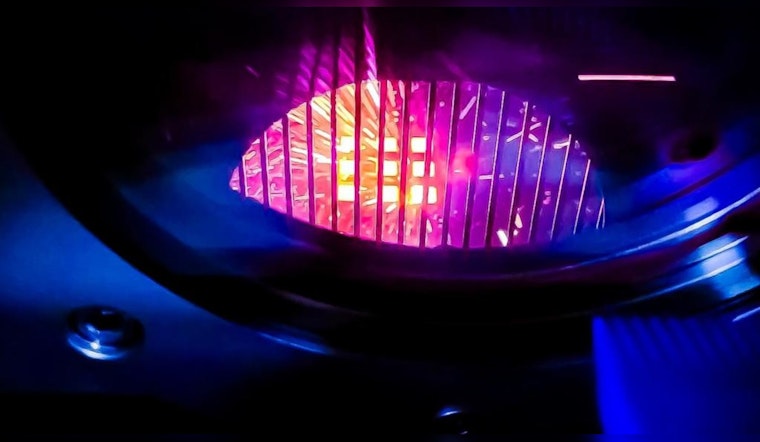
Finessing the electron beam melting process allowed the research team to print test components showcasing the alloy's remarkable characteristics. In a statement obtained by ORNL, Saket Thapliyal, a member of the ORNL team, underscored the breakthrough: "No one has been able to develop and print alloys with such a high melting temperature and low density without cracks before." The discovery stands to revolutionize an industry under pressure to reduce greenhouse gas emissions without compromising the integrity and performance of aircraft components.
While the technological marvel has so far only reached the phase of test printing, the implications of this research ripple beyond the labs of ORNL. Blades crafted from such resilient material could extend the lifespan of aircraft engines, result in fuel savings, and offer a meaningful reduction in the carbon footprint associated with air travel. "This is significant. We’re making something lighter that can hold its structural integrity at ultra-high temperatures," Thapliyal told ORNL. The composite's adaptation in mainstream aviation, however, still hinges on the success of ongoing trials and potential industry uptake.



