

























































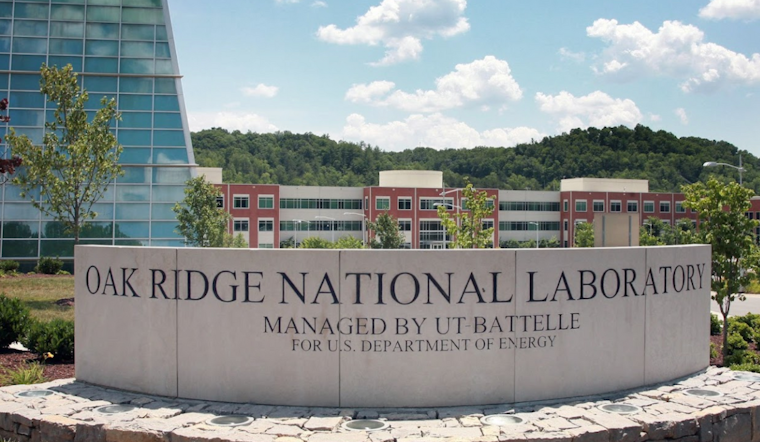
The Department of Energy is doubling down on its commitment to intertwining artificial intelligence with science. In a recent announcement, DOE revealed a $67 million investment that will bankroll numerous AI ventures, with Oak Ridge National Laboratory (ORNL) snagging a significant share of the pie. The cash injection is aimed at etching out new frontiers in areas like scientific machine learning and automating lab workflows, marking a strategic move that harnesses AI's potential to reshape research.
Dig into the details and you'll find that six ORNL-anchored projects have been chosen to put this funding to practical use. These efforts range from devising energy-smart algorithms for graph learning in the ENGAGE project to injecting dynamism into generative AI with DyGenAI, all the way to bolstering high-performance computing (HPC) software with an AI twist. Selected via a competitive peer-review process, these projects are each envisioned to actively contribute to pushing scientific boundaries. The DOE funding, accessible for up to three years, promises to well and truly deepen the integration of AI within HPC.
A senior computer scientist at ORNL, William Godoy, spoke about the significance of this move, noting the lab's anticipation of AI's progress for years. According to the Oak Ridge National Laboratory, Godoy explained, "But we were still working on what AI means for HPC, considering the niche nature of HPC systems." The funds will fuel research into optimizing large language models (LLMs) for use on groundbreaking systems like the exascale supercomputer Frontier. It's a bold step that follows in the wake of the widely discussed AI chatbot, ChatGPT, with Godoy's team partnering with national laboratories and academic experts to pioneer HPC-specific LLMs.
ORNL's Pedro Valero Lara, also a senior computer scientist, sees immense potential in this direction. LLMs, under their watchful development, are expected to effortlessly switch programming language gears from, say, archaic HPC Fortran codes to sleeker, more capable C++ variants. "If I give a piece of code implemented in one particular language, I can ask the LLMs to make the translation from that language to another language," Valero Lara told ORNL News. His vision is of LLMs boosting performance by leaps simply by translating code suited for specific HPC goals.
Aside from these breakthroughs, projects like the Privacy-Preserving Federated Learning initiative are being positioned as trailblazers for secure AI science solutions. Olivera Kotevska, leading the charge here at ORNL, emphasized the importance of the DOE's support, stating, "This support enables our team to advance cutting-edge research in privacy-preserving AI, which is crucial for safeguarding sensitive scientific data while fostering collaboration across institutions." The endeavor strives not only for scientific excellence but also for cementing ORNL's stance as a trustworthy AI systems pioneer, with a ripple effect across the national security landscape, as cited by the Oak Ridge National Laboratory.



