

























































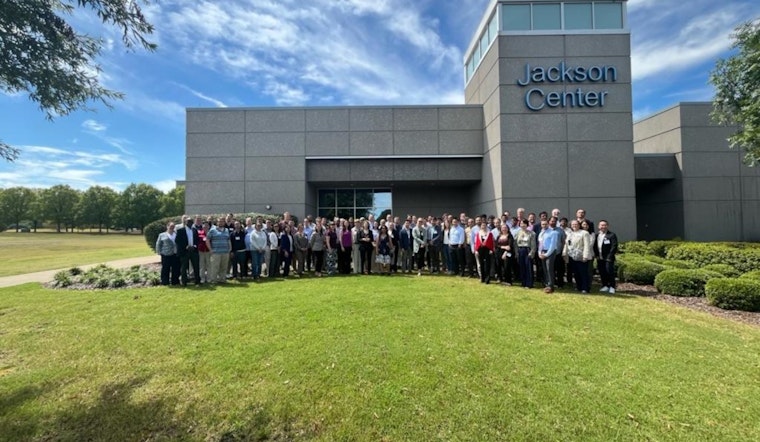
Groundbreaking advancements in geospatial artificial intelligence and digital twins were the highlight of the Trillion Pixel Challenge Workshop that took place in Huntsville, Alabama. Over the course of two days, from Sept. 4 to 5, government labs, including the Department of Energy’s ORNL and NASA, joined with private sector experts in a synergistic event that concentrated on leveraging AI foundation models to boost the capabilities of geospatial digital twins, technologies that model real-life objects and phenomena for simulation and analysis, as reported by Oak Ridge National Laboratory's news post.
According to Budhu Bhaduri, the director of science programs and partnerships within the National Security Sciences Directorate at ORNL, the workshop named for its vision, aims to revolutionize digital representation on a global scale. "With the Trillion Pixel Challenge, we ask, in 24 hours, what is possible from data infrastructure to AI, to hardware and software architectures, to partnerships in responding to the requirements of the science and operational communities," Bhaduri noted in his address to attendees, as published by ORNL.
The potential applications of these AI-powered digital twins are vast and include predicting weather patterns, assessing the impacts of conflicts, and detecting features both manmade and natural. The panels at the workshop dissected various aspects of digital twin technology such as the nuts and bolts of hardware, software, data and the infrastructural needs for these advanced models. Panelists also argued on whether digital twins were a real shift or just a repackaging of existing concepts, with May Yuan, a program director at the National Science Foundation, questioning, “Are we just putting old wine in new bottles?” as per ORNL.
The conversations also delved into the technical necessities to support these systems, with a strong emphasis on data structures and computing power. For instance, a compelling discussion was presented by Catherine Schuman, assistant professor in the Department of Electrical Engineering and Computer Science at the University of Tennessee, regarding neuromorphic computing's contribution to accelerating GeoAI processing. She explained how mimicking the brain's information processing could be helpful alongside high-performance computing, especially for processing data in the field, "Neuromorphic computing could also create opportunities to process data where it's being collected, such as within satellites or remote sensing devices," Schuman said, which was cited in the ORNL article.
To culminate the workshop, Bhaduri expressed anticipation for the collaborations brewing, notably between ORNL, NASA, and the National Geospatial-Intelligence Agency. He teased the prospect of next year's workshop in St. Louis, Missouri, "I cannot wait to see the community continue to grow while steering its focus onto programmatic TPC challenges that we can point toward in measuring progress and success," said Dalton Lunga, the GeoAI group leader and senior R&D scientist at ORNL. The Department of Energy's Office of Science, a substantial funder of physical sciences research, backs UT-Battelle in managing ORNL, and by extension, initiatives such as the Trillion Pixel Challenge, mark consequential steps towards addressing some of the most critical challenges of our times, according to ORNL.



