

























































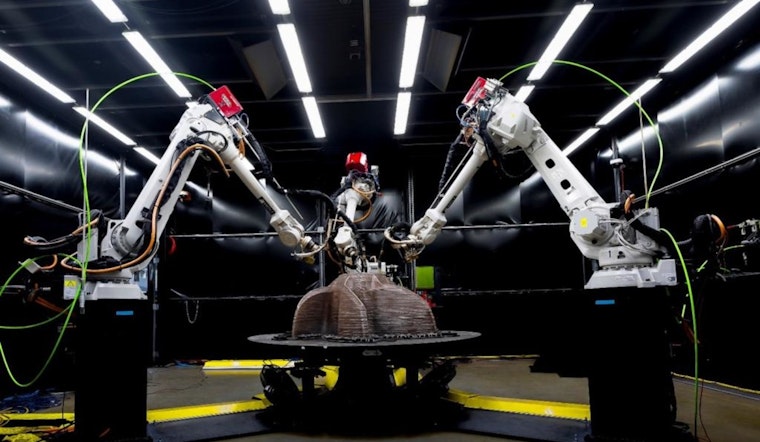
To bolster domestic manufacturing, particularly for the clean energy sector, the Department of Energy's Oak Ridge National Laboratory (ORNL) researchers are pressing forward with innovations in advanced manufacturing techniques. As traditional methods like casting and forging see a decline in the United States, ORNL scientists are pioneering work in powder metallurgy-hot isostatic pressing (PM-HIP), which could help to revitalize the production of metal parts within the country, as reported by ORNL.
This technology is particularly crucial for manufacturing large parts weighing over 10,000 pounds, which are urgently needed across industries ranging from aerospace to renewables. The researchers are actively deploying process improvements to efficiently create molds for these parts, in a move that looks to directly combat the current supply-chain shortages faced by these critical sectors in the U.S. Jason Mayeur and Soumya Nag, senior research scientists at ORNL, are at the forefront of these advancements. They aim to utilize advanced computational modeling and additive manufacturing methods to not only make PM-HIP more precise but also to substantially cut down the costs of production.
According to ORNL, Mayeur said that "PM-HIP is a vital pathway for diversifying the supply chain for producing large-scale metal parts that are becoming more difficult to source via conventional means." These large-scale components serve various industries, including the Department of Defense and clean energy sectors such as nuclear and hydroelectric.
Both Mayeur and Nag bring a wealth of experience to the table—Mayeur with his two decades in computational solid mechanics and Nag with his extensive background in materials and manufacturing. Their collaboration has given rise to a new, convergent approach that leverages the unique design flexibility offered by additive manufacturing. "Jason is an expert in predictive modeling of deformation characteristics of hot isostatic pressing cannisters. I am more involved on the experimental side of things," Nag said, as stated by the ORNL.
With the PM-HIP technique, the ORNL research promises more than just revitalized manufacturing of large parts. It speaks to bigger issues of energy independence and national security. Mayeur will also be participating in an upcoming workshop at the ORNL’s Manufacturing Demonstration Facility, which aims to tackle key challenges inhibiting the broader adoption of PM-HIP.



