

























































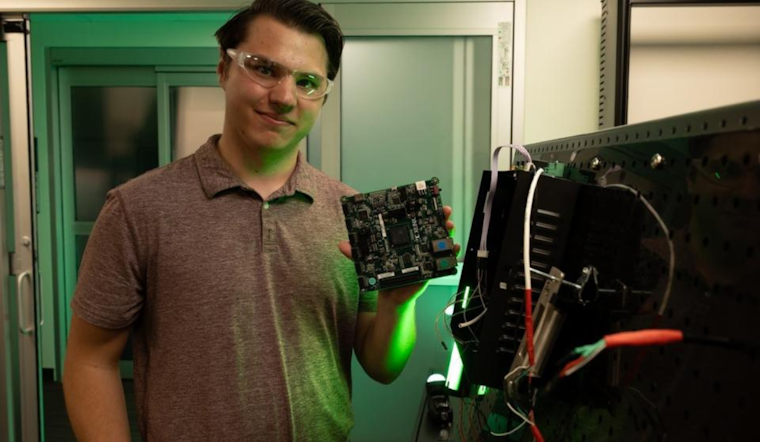
When it comes to security, we often believe that our key cards and fobs are the gatekeepers to our personal and professional sanctuaries. But interns at the Department of Energy’s Oak Ridge National Laboratory (ORNL) have delivered a reality check, indicating that these systems might not be as ironclad as we hope them to be. As reported by the Oak Ridge National Laboratory, a group of young scholars dove headfirst into the world of cybersecurity to dissect the reliability of door access control systems
.By employing tools such as logic analyzers, these interns, participants in DOE’s OMNI cybersecurity internship program, managed to identify and exploit weaknesses within supposedly secure systems. Andrew Tabaczynski, for instance, a Purdue University Northwest electrical engineering student, took it upon himself to code a way to understand the digital language of access keys, a breakthrough he plans to share on GitHub for all digitally inclined eyes to see.
Ashton Ruesch, hailing from Dakota State University, demonstrated the potential of what's seemingly an innocuous tool to mimic an access key’s signal with frightening precision. Meanwhile, Tristan Clark, a Ph.D. candidate from the University of South Alabama, bypassed the key altogether, choosing instead to worm his way in through a Wi-Fi access point, signaling a thriving craftiness in tomorrow’s cybersecurity professionals.
Concerns around digital security don’t stop at doorsteps, as Simon Campos Greenblatt, a recent Brown University cybersecurity graduate, unveiled. Turning his gaze towards the ubiquitous internet routers, Simon discovered worrying susceptibilities in satellite internet routers, over 800 of which are still tick-ticking away with exploitable firmware worldwide. In a world where updates are but a click away, it's jarring yet crucial intel for the everyman.
These interns, beyond flexing their analytical muscles, were guided by ORNL mentors like Ryan Styles. He expressed great pride in the interns' abilities to manage substantive projects, emphasizing the real-world import of their summer's quest. And it's not just about the tech, it’s about the awareness the interns have fostered amongst users—revealing that even the most common of electronics could be Achilles’ heels if left unchecked. As Ruesch succinctly advised, as per ORNL, “If you have something you want to protect, make sure you evaluate the flaws and know the risks in the system.”



