

























































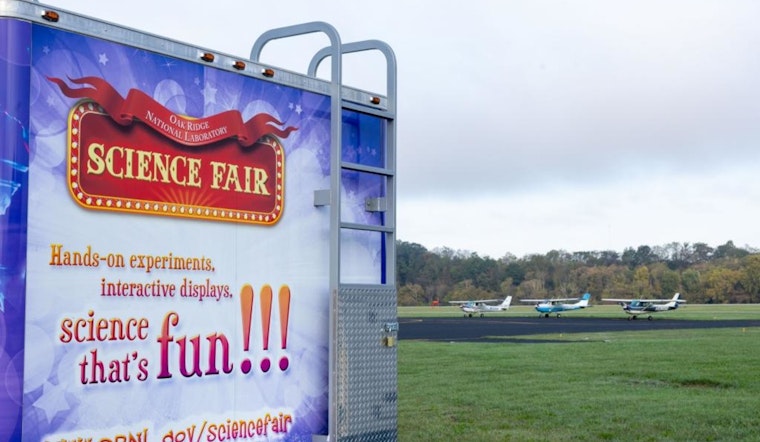
Last week, the Downtown Island Airport (DKX) was alive with more than just airplane engines; young minds were whirring with excitement and curiosity. A special "Soar into STEM" Traveling Science Fair took place, courtesy of a collaborative effort from Oak Ridge National Laboratory (ORNL), United Way, and local community schools. The event aimed to ignite a spark for science, technology, engineering, and mathematics (STEM) among elementary school students, particularly from underserved communities.
As reported by ORNL, over 500 5th-grade students from the vicinity had an opportunity to immerse themselves in the world of STEM through this interactive fair. It marked a return to form for the well-regarded program, which had been on pause due to the COVID-19 pandemic. The event served as de facto bridge connecting these youths to potential futures in aviation and science-based careers.
An array of ORNL's achievements—in fields such as aviation fuels, quiet engine technology, and advanced materials—and their applications toward sustainable aircraft design were on display. Thomas Proffen, one of the fair's long-time advocates and a neutron scattering scientist, expressed his enthusiasm for getting back to in-person engagement. "I am thrilled we are out there again after the COVID break,” Proffen told ORNL. “I love to figure out how things work and creating solutions to the world’s problems, and I love sharing this passion with the next generation of scientists."
The fair wasn't just a showcase for the seasoned veterans of ORNL. Plenty of new volunteers also lent their expertise, including postdoctoral research associate Jenny Warnock. Her lively explanations on microbes captured the attention of engaging students. "Science is for everyone. Nobody is born a scientist. These are all things that you learn and if people are interested, then it’s something they should pursue, but kids need the exposure to it first to even see if they are interested,” Warnock said, according to a statement obtained by ORNL.
Interactivity was a crucial element of the fair as students engaged with hands-on exhibits. One such example was the "Extreme Science" exhibit, where a fidget spinner too small for the naked eye became a centerpiece, thanks to the wonders of magnification technology. Andres Marquez, a chemical engineer who's been involved with the program for over eight years, detailed the importance of reaching out to students early on. "I try to engage with them in a way that they will care about, explaining science topics that are fun and would impact their lives," Marquez shared in a statement with ORNL.
Teachers accompanying their students were similarly impacted. Gina Alexander, a fifth-grade teacher at Pond Gap Elementary, was a first-time attendee and contemplated the significance of such real-world exposure for her students. Alexander highlighted her revelation from the fair: "Learning that bananas have radiation just blew me away. I’m seeing little minds being opened to science, and I love every bit of it because every day is science," as she noted to ORNL. The "Soar into STEM" Traveling Science Fair evidently left lasting impressions, potentially nurturing the scientists and innovators of the future.



