

























































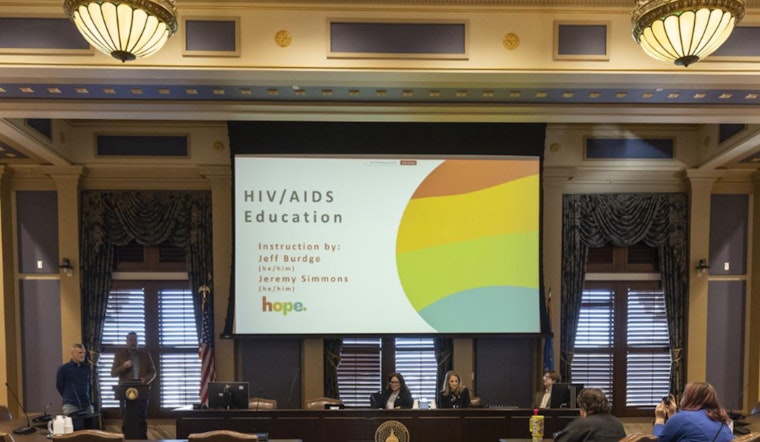
On Wednesday, Oklahoma state Senators Carri Hicks and Julia Kirt held a public forum to discuss the ongoing issue of HIV in the state. The forum focused on reevaluating the current approach to managing HIV, suggesting that improving education and prevention efforts could lead to better health outcomes. This comes as an alternative to the state's current practice of criminalization, according to the Oklahoma Senate.
Experts in HIV criminal law and public health advocates discussed Oklahoma's laws, noting that they are both stigmatizing and outdated. Sen. Hicks stated, "Many Oklahomans may not realize that there are now medications that make the virus completely undetectable, and at that point there is no chance of transmission, yet we have outdated laws on the books that continue to stigmatize HIV and those living with it." She expressed confidence that modernizing the laws could lead to better health outcomes by focusing on reducing transmission, as reported by the Oklahoma Senate.
Sara Raines from the Oklahoma City-County Health Department explained that punitive measures have not been effective in changing public behavior. "We know that trying to make public examples out of people doesn't really deter other people's behavior. That's not a super-effective prevention tool," Raines said at the forum. She pointed to the ongoing HIV epidemic in Oklahoma as a reason for reconsidering current strategies. In the past, public health officials relied on counseling and education to change behavior before the focus shifted to criminalizing HIV, as mentioned by the Oklahoma Senate.
"The current law in Oklahoma states that a person living with HIV can go to prison for five years for not disclosing their status before consensual sex, even when they did not intend to harm anyone...and no harm resulted," said Vivian Topping from the Equality Federation. As of 2024, 16 states have updated or repealed HIV criminalization laws. Senate Democratic Leader Julia Kirt noted that "HIV transmission is a growing problem throughout our state, in urban and rural communities alike," and called for redirecting funds toward education and prevention rather than incarceration, as stated by the Oklahoma Senate.




