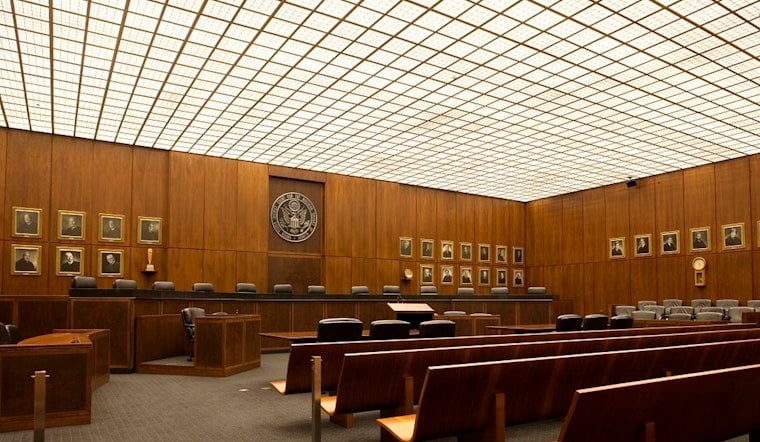
The courtroom in Lake County became a focal point for a pivotal pre-trial hearing involving Robert Crimo III, the suspect accused of the Highland Park parade shooting in July 2022. During the proceedings, the defense team attempted to exclude hours of their client's police interrogation from being used in the upcoming February 2025 trial. According to The Chicago Sun-Times, they argue that law enforcement overstepped their bounds by not fully informing Crimo about a lawyer, hired by his family, who was available to consult him at the station.
Judge Victoria Rossetti, presiding over the case, is set to deliver a written ruling next month on the defense's motion to suppress the video evidence as well as a separate motion by prosecutors. After skipping several hearings, Crimo showed up to the recent one and was seen giving a peace sign, targeting prosecutors, during the proceeding. His appearance followed the testimony by Sgt. Brian Soldano, who identified Crimo in surveillance footage presented by prosecutors, as reported by ABC7 Chicago. Soldano, a former school resource officer familiar with Crimo, played an instrumental role in linking the suspect to videos from the crime scene.
Central to the debate is whether Crimo's Sixth Amendment rights were violated when the police allegedly withheld the information that the attorney waiting to speak with him had been sent by his family. Gregory Ticsay, Crimo’s public defender, claimed in a motion that this failure to provide complete information halted Crimo from acknowledging the offered legal counsel, necessitating the suppression of the subsequent interrogation footage. "When his retained attorney was not given access to him during his custodial interrogation ... they violated his due process rights, period. That’s a constitutional violation. ... The rest of his interview should be suppressed," Ticsay told The Chicago Sun-Times.
Prosecutor Jeffrey Facklam rebuffed the defense's claims by insisting that Crimo was adequately informed of his rights and had chosen to waive them. "I would say the question is, ‘Has he been advised that there was an available attorney?’” Facklam said, asserting police fulfilled their duty, as Crimo knew he could talk to a lawyer at that moment and chose not to, according to The Chicago Sun-Times. The prosecution also argued against the idea that a family attorney should be allowed to enter an interrogation room despite the defendant’s own refusal, which does not align with Crimo invoking his right to legal counsel.
This critical hearing comes amid Crimo's charges for taking seven lives and wounding many others during the mass shooting at Highland Park's Independence Day parade last year. While significant portions of Thursday’s court session were devoted to the admissibility of Crimo's interview, the court also viewed a video alleged to display Crimo in the vicinity just before the shooting, dressed in a skirt and other women's attire. The display of the video was to facilitate the resource officer's identification of Crimo, as documented by ABC7 Chicago. The decision on whether the interrogation footage will be seen at trial, as well as other motions, now rests with Judge Rossetti’s forthcoming written statement. The outcomes of which will no doubt mold the forthcoming trial next year.