

























































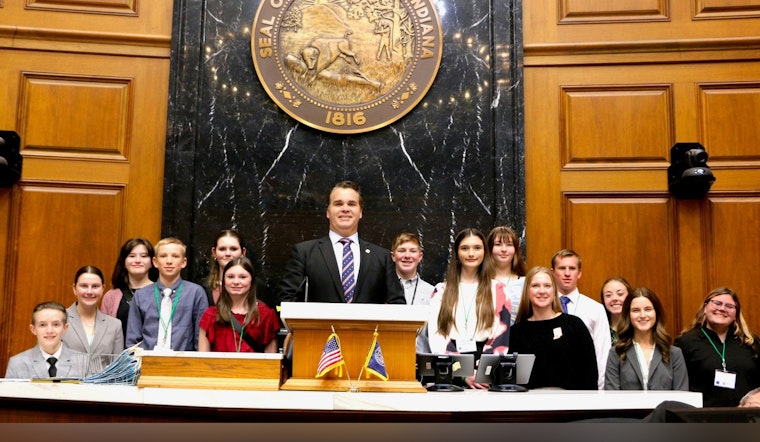
Students involved in FFA and 4-H programs across Indiana are set to notably benefit from new legislation that the Indiana House of Representatives has passed. Authored by State Rep. Beau Baird (R-Greencastle), House Bill 1660 aims to formally allow these students excused absences from school to attend program-related events. According to Indiana House Republicans, Baird expressed the bill's intention "to provide students with invaluable experiences that build leadership, responsibility and real-world skills."
Baird emphasized the importance of such programs in preparing young individuals for leadership roles and mentioned that "House Bill 1660 is about supporting the next generation of leaders in Indiana." This new bill looks to ensure that students can take part in up to six 4-H and FFA events per school year, without the risk of receiving unexcused absences. To qualify, students would be required to maintain good academic standing, as per the Indiana House Republicans.
The bill has received wide support, with a unanimous vote out of the House Education Committee before passing the full House. It represents an investment in the growth of students and, by extension, the future of Indiana as these organizations are known to encourage development of practical agricultural and leadership skills.
With this legislative move, Indiana seeks to recognize and prioritize educational opportunities that exist outside of the traditional classroom setting. This policy change mirrors a broader trend of incorporated experiential learning into formal education systems. If the bill passes the Senate, Indiana educators will be obliged by law to practically recognize these events as extensions of students' learning environments. According to the report from Indiana House Republicans, Baird said, "By ensuring they can participate in these programs without penalty, we're investing in their growth and the future of our state."
The bill's unanimous passage in the House sets a positive tone for its future consideration in the Indiana Senate, where it will be evaluated next. Stakeholders from educational, agricultural, and legislative fields will closely watch this next phase, as it will set precedent for how extracurricular agricultural programs are valued in education systems.





