

























































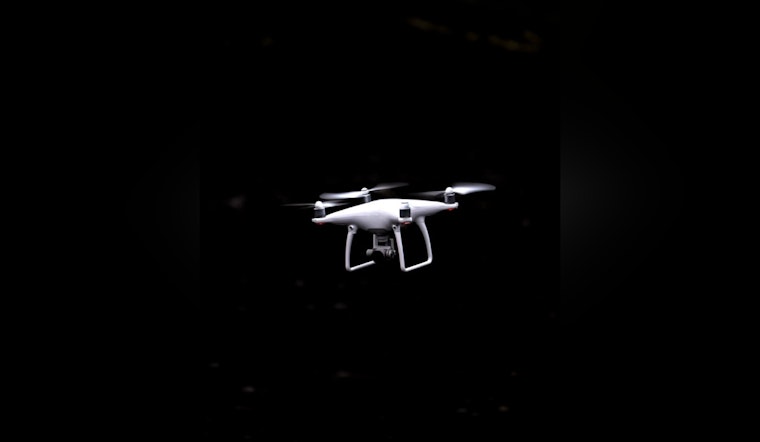
MIT engineers are making headlines with a new training method that promises improved safety for drone shows, warehouse robots, and even self-driving cars. The team's innovative approach addresses the hazards associated with "multiagent systems"—that is, groups of robots or drones designed to work together. As these shows gain popularity, the risks have become more apparent, with recent accidents in Florida and New York highlighting the potential for danger when things go awry.
The new training method, as reported by MIT News, allows a small number of agents to create safety margins that scale up to larger groups, which, effectively reduces the computational strain and makes it easier to coordinate large numbers of drones or robots. The method eschews the tedious process of planning the trajectory of every single agent in the system, instead enabling the agents to map out their own safety zones in real time and adapt as needed.
According to Chuchu Fan, associate professor of aeronautics and astronautics at MIT the new safety system acts like a "shield, or safety filter," ensuring each agent can continue its mission within the bounds of security. Fan told MIT News, "this provides a shield, or safety filter, saying each agent can continue with their mission, and we’ll tell you how to be safe."
Demonstrations of this method's effectiveness have been quite promising. The team at MIT utilized a system of eight Crazyflies, small quadrotor drones, which managed to smoothly navigate and adjust their flights in real time to avoid potential collisions. This feat demonstrates the practical applications of GCBF+, or Graph Control Barrier Function, the algorithm behind this safety-oriented innovation. The algorithm's ability, to include only the immediate environment of an agent to consider safety, simplifies interactions within crowded settings, another complexity in traditional multiagent systems.
The implications of these advancements extend far beyond drone light shows. The same principles could revolutionize safety mechanisms in various industries, particularly those using autonomous systems like warehouse logistics and self-driving vehicles. MIT’s method could thus become a fundamental aspect of future robotics engineering, ensuring efficient operations without compromising on safety. This work received backing from the U.S. National Science Foundation, MIT Lincoln Laboratory under the Safety in Aerobatic Flight Regimes program, and the Defence Science and Technology Agency of Singapore, which underlines the significance of safer multirobot systems on a global scale.



