

























































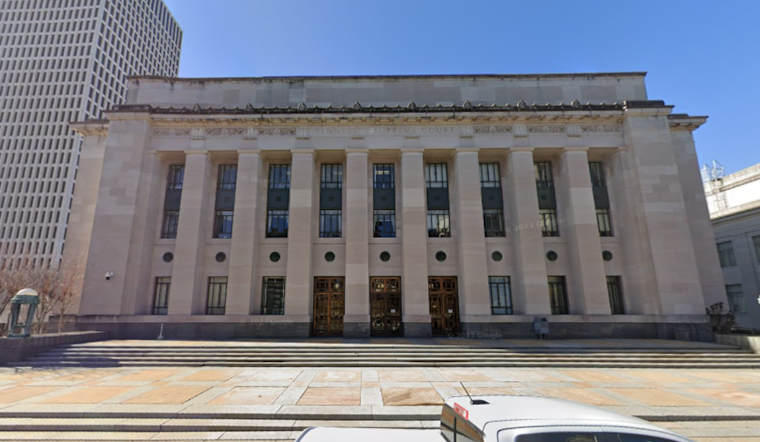
The Tennessee Supreme Court has ruled that personalized license plates are a form of government speech not protected under the First Amendment's free speech clause. This decision occurred in the case involving Nashville resident Leah Gilliam, who had her custom plate "69PWNDU" revoked after a decade of use. State officials interpreted the alphanumeric combination as offensive due to a reference to sexual domination, a claim Gilliam disputed, stating the numbers referred to her phone number.
Gilliam's legal battle began after the Tennessee Department of Revenue decided to cancel her personalized license plate. As reported by WSMV, Gilliam sued the state to challenge this action, alleging discrimination based on viewpoint in violation of the First Amendment. However, the state contended that since license plates are government speech, the ban on creating certain combinations was permissible and didn’t unfairly target any specific message or viewpoint.
According to FOX 17, the Tennessee Supreme Court held that vanity license plates are not private speech because they are government-issued identifiers. This ruling aligns with the 2015 United States Supreme Court decision in Walker v. Texas Division, which was a major precedent in determining whether specialty license plates constitute government or private speech.
The high court maintained its stance despite Gilliam’s assertion that her license plate was innately personal and a form of self-expression. "Although personalized alphanumeric combinations differ from specialty plate designs in some respects," the Tennessee Supreme Court stated, "a faithful application of Walker’s reasoning compels the conclusion that alphanumeric codes are government speech too," as noted in the documentation detailed by The Tennessean. This essentially grants the state authority to regulate the content of these personalized messages as it sees fit.





