

























































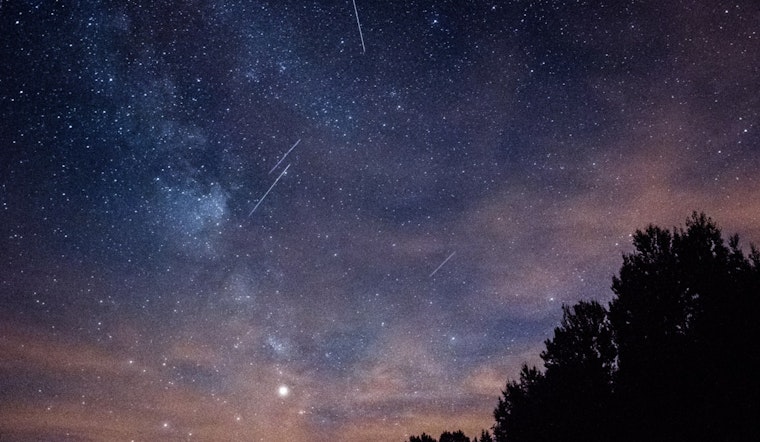
April's night sky will feature two meteor showers—the Lyrids and the Eta Aquarids—visible to Bay Area stargazers. According to Gothamist, the Lyrid meteor shower is expected to peak on April 22, with favorable viewing conditions due to the waning moon's minimal interference. Up to 18 meteors per hour may be visible during the peak as the Earth passes through debris from Comet Thatcher.
Astrophysicist Jackie Faherty, speaking with Gothamist, pointed to the potential of seeing fireballs, noting, "If you like seeing fireballs, AKA shooting stars, AKA pieces of sand burning up in the atmosphere, then you've got a good chance." Meanwhile, NASA space ambassador Kat Troche encouraged skywatchers to simply "kick back and look up" to enjoy the show, particularly as the waning moon will not significantly impact visibility. Simultaneously, the Eta Aquarids, originating from Halley’s Comet, will make their appearance from April 20 onward, culminating in a peak next month capable of producing up to 50 meteors per hour.
As reported by Space.com, the Perseids, Geminids, and Orionids are also among the notable meteor showers of 2025. The Perseids will unfortunately coincide with a nearly full moon on Aug. 12-13, which may reduce the visibility of fainter meteors, though the event is still expected to be worthwhile before dawn. The moon will set after 2:30 a.m. during the Geminids on Dec. 13-14, providing optimal viewing conditions around midnight. The Orionids will peak overnight on Oct. 20-21, benefiting from a new moon, with 2 a.m. being the best time for skywatchers.
These meteor showers present celestial events for both amateur astronomers and experienced stargazers, allowing the public to observe the cosmos from their own backyards. Experts recommend finding a dark, open space away from city lights and allowing your eyes to adjust to the darkness for at least 20 minutes for optimal viewing. Additional information on the meteor showers and viewing tips can be found on Space.com.





