

























































In a significant leap forward for biosecurity measures at US borders, Department of Homeland Security's Science and Technology Directorate (S&T) and the Department of Energy’s Oak Ridge National Laboratory (ORNL) are developing new technologies to quickly detect plant diseases and pests in agricultural imports, as reported by ORNL News. The emerging tech aims to increase the safety and efficiency of inspections while minimizing disruption to commerce. Considering the sheer volume of fresh produce and animal products that cross into the United States annually, these advancements couldn't be timelier; hidden pathogens in these shipments pose substantial risks to agriculture and the economy.
Every year, millions of pounds of agricultural yield are lost to diseases, pests reduce the annual global yield of crops such as wheat, rice, corn, potatoes, and soy by over 20%, leading not only to significant economic losses but also impacting the food supply chain, a concern which is elevated given the perishable nature of these goods, an exigency driving research to shore up border inspection processes. S&T's Food, Agriculture, and Veterinary Defense project is stepping up to address these issues, focusing on technologies that are both highly accurate and capable of keeping pace with the flow of goods. Rory Carolan, S&T Program Manager, emphasized the gravity of the situation, stating, “Maintaining the integrity and continuity of food and agricultural supply is imperative,” and any disruption could be catastrophic with huge economic impacts, a concern underscored by the industry’s $1.1 trillion annual contribution to the U.S. economy.
While historically, S&T’s primary concern has been high priority animal diseases as part of its work with the Plum Island Animal Disease Center, crop and plant security are now becoming a new frontier,” Rory Carolan, who is leading the plant disease detection initiative, told ORNL News. Manual inspections, the go-to in present circumstances, are often not sufficient for identifying invisible threats. To enhance the efficiency and effectiveness of inspections, S&T is investing in detecting diseases that pose the highest risk to U.S. agriculture.
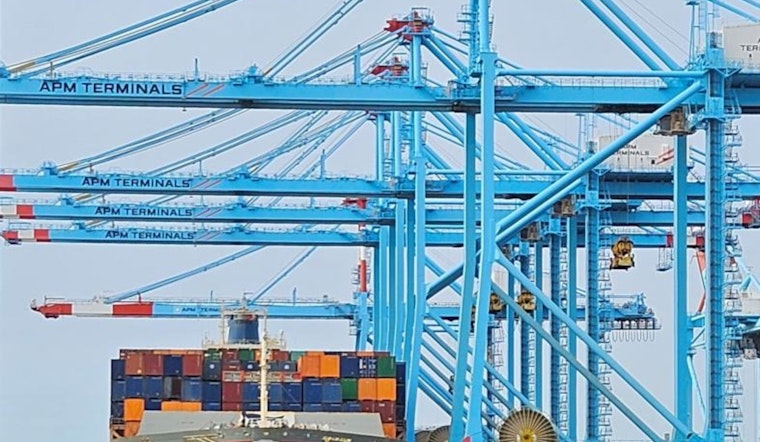
A comprehensive assessment conducted by S&T and ORNL has resulted in the selection of innovative BVOC (Biogenic Volatile Organic Compounds) detecting technologies for further development. These tools detect unique scents emitted by pathogens or the affected plants which, "Pathogens release characteristic waste products or metabolites, but at the same time the infected plants’ chemistry may change and release different products,” David Graham, biosecurity programs lead at ORNL, explained. Researchers are optimizing these technologies, using mass spectrometry and electronic sensors, to operate effectively even in challenging environments such as the "bustling, dusty, hot ports of entry where rail cars, tractor trailers, cargo ships arrive from abroad,” with the application of artificial intelligence and machine learning to cut through extraneous noise and focus on key BVOC signatures.
The initiative is currently in the technology development phase, with S&T and ORNL running laboratory tests simulating real-world conditions to refine the detection process. “For example, we'd be blowing diesel exhaust at them,” Carolan said, to test the technology’s robustness. Field tests envision non-invasive implementation amidst the daily operations at ports of entry, with the intent to facilitate the flow of commerce while safeguarding against biological threats. Carolan envisions that in the future, the application of BVOC technology will expand to cover a range of potential threats from passengers' baggage to explosives detection. ORNL, managed by UT-Battelle for DOE’s Office of Science, continues to probe into the pressing challenges of our era with a dedicated focus on the physical sciences.



