

























































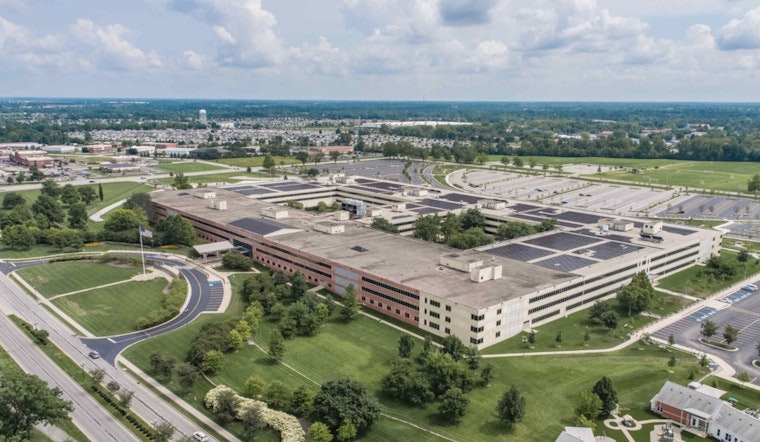
As President Donald Trump's administration steers toward federal cost-saving measures, Indiana is confronting the potential closure of three federally owned buildings deemed "non-core" to governmental functions. The properties in question include the sprawling Major General Emmett J. Bean Federal Center in Lawrence, the Minton-Capehart Federal Building in downtown Indianapolis, and the Lee H. Hamilton Federal Building and U.S. Courthouse in New Albany, according to the IndyStar.
These closures, part of a roster initially citing 440 facilities for "disposal," could yield more than $430 million in annual operational savings, based on estimates by the General Services Administration (GSA). The GSA, however scaled back by revising the list down to 320 properties - although Indiana's three remained, reported by FOX59. Nonetheless, the Department of Government Efficiency (DOGE), an organization founded by Elon Musk, already counts five Indiana lease terminations among its cost-cutting triumphs.
Dissatisfaction among local representatives has surfaced in the wake of these announcements, with Democratic U.S. Rep. André Carson highlighting inaccuracies in DOGE's claims. "DOGE claims these buildings are functionally obsolete and unsuitable for use by the federal workforce. This is untrue. I serve as a senior member of the House Transportation & Infrastructure Committee, and we publicly reviewed and approved both local facilities to ensure they are in the best condition possible to fulfill their respective agency missions," Carson told the Indiana Capital Chronicle. Further criticism arose as Carson noted the newly endangered construction of a Department of Veteran Affairs medical facility in Indianapolis, crucial to addressing overcapacity issues at the existing Roudebush Medical Center.
Carson, as well as local real estate experts, underscored the potential economic consequences, arguing that the purportedly "underutilized" buildings play an important role in Indianapolis and Indiana's economy. "This would be a threat to both the Indianapolis and Indiana economy, and it would certainly, if implemented, affect the ability of hardworking Hoosiers to put food on the tables for their families," former Democratic official and real estate managing director Gordon Hendry said in a statement obtained by the Indiana Capital Chronicle.
The dialogue around these closures also touches upon the strategic and logistical repercussions, with Carson expressing concerns about how it might impact military readiness and locals in need of federal services. However, the future of these government-owned properties remains uncertain, as the GSA plans to reassess their "non-core" asset list and stakeholder feedback before taking further action. In tandem, terminated leases have called into question the fate of not just the Indiana offices but the services they provide, an issue tracked but still unclear despite DOGE's cost-saving declarations.




