

























































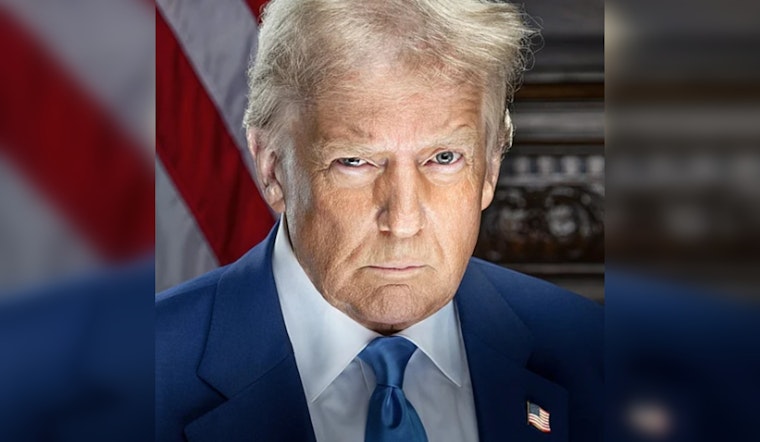
The tariff tussle between the United States and China continues to escalate, leaving U.S. importers reeling under the weight of massive levies. As of early Wednesday, President Donald Trump's administration has enforced a formidable 104 percent import tax on Chinese goods, compounding the economic strain for American companies dependent on manufacturing abroad. Reports from the Chicago Sun-Times indicate that local businesses are among those hit hard, with the CEO of Learning Resources, Rick Woldenberg, expressing economic trepidation, to say the least. "Honest to God, no exaggeration: It feels like the end of days," Woldenberg said.
The new trade measures swiftly follow the introduction of a broad-spectrum 10 percent tariff on nearly 125 countries, announced last week. According to WGN-TV, Trump's verbal salvo deemed April 2 "Liberation Day", initially saw China slapped with a 34 percent reciprocal tariff. However, this move was quickly superseded by the newly enacted 104 percent tariff after China announced its retaliatory measures.
As prices are predicted to soar, this new reality chips away at the previous period of affordable consumer goods, sustained largely by China's manufacturing prowess. The implications are not limited to just cost increases but extend to the very dynamics of American businesses. Others in the toy industry share Woldenberg's plight, with Isaac Larian, founder of MGA Entertainment, wrought with concern over a business landscape marred by unpredictability. "And no business can run on uncertainty," Larian declared in a statement obtained by the Chicago Sun-Times.
Yet, amidst this fray, some are seeking alternatives. Marc Rosenberg, CEO of The Edge Desk, is exploring markets outside the U.S. to sidestep Trump's crushing tariffs. "Now he is delaying production while exploring markets outside the U.S.," as per the Chicago Sun-Times. Additionally, the tariff onslaught has prompted forecasts predicting a slowing U.S. economic growth, with the Yale University Budget Lab estimating a decline by 1.1 percentage points for 2025.





