

























































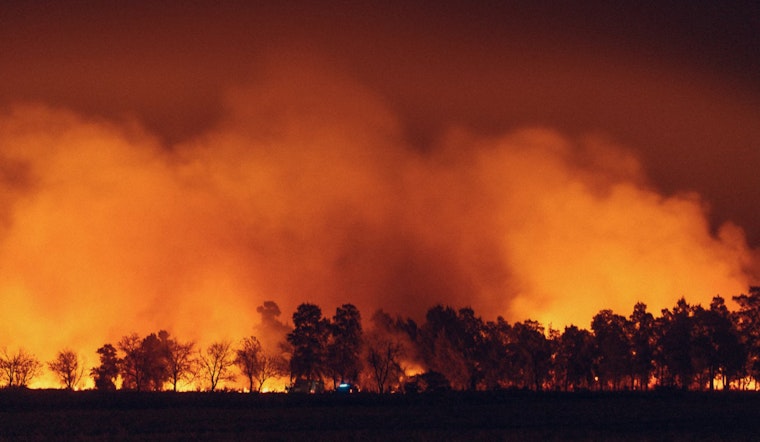
In an effort to bolster ongoing firefighting and safety operations amid a relentless wildfire season, North Carolina's Governor Josh Stein has announced a 30-day extension to the State of Emergency for 34 affected counties in western North Carolina. Governor Stein expressed his gratitude towards the diligence of personnel working to mitigate the crisis, saying, "I appreciate all of the first responders, emergency managers, state forest rangers, and state and local officials working hard to protect North Carolinians from wildfires," in a statement obtained by the Office of the Governor. "I am extending this State of Emergency to ensure the State Emergency Response Team has every resource available to continue to respond to wildfires to protect people and property."
The heightened urgency of the State's response to the wildfires comes as a direct result of the severe fire conditions that have persisted through the spring, having already responded to over 2,000 incidents involving thousands of acres. Agriculture Commissioner Steve Troxler noted the strain on resources and the importance of caution in these situations, “The spring wildfire season is off to a very busy start, which has kept the N.C. Forest Service, first responders and emergency management staff on their toes. Already in March and April, we have responded to 2,348 wildfire incidents involving over 23,000 acres,” he told the Office of the Governor. "I appreciate the Governor extending the State of Emergency and making resources available, especially with the elevated risk of wildfires in Western NC. I also urge people to use extreme caution when doing any burning."
The State Emergency Response Team remains actively involved with counties, providing resources and personnel where needed, and operating in close coordination with state authorities including the North Carolina Office of State Fire Marshal and the North Carolina Forest Service. Efforts to support affected communities with firefighters, logistical supplies, and equipment have been persistent, indicative of a robust and cohesive emergency management infrastructure.
Furthermore, the State Emergency Operations Center’s 24-Hour Watch Center has continued to effectively aid counties to quickly manage evacuation procedures. Through utilization of the Wireless Emergency Alert Network and the Integrated Public Alert and Warning System, they have been able to promptly inform residents potentially in danger. "I remain incredibly proud of our state’s local emergency managers and public safety personnel, and they have done a tremendous job with managing these wildfires since March” said North Carolina Emergency Management Director Will Ray, commending the coordinated efforts during this crisis, according to the Office of the Governor.
The reiterated State of Emergency includes the counties: Alexander, Alleghany, Ashe, Avery, Buncombe, Burke, Cabarrus, Caldwell, Catawba, Cherokee, Clay, Cleveland, Gaston, Graham, Haywood, Henderson, Iredell, Jackson, Lincoln, Macon, Madison, McDowell, Mecklenburg, Mitchell, Polk, Rowan, Rutherford, Stanly, Swain, Transylvania, Union, Watauga, Wilkes, Yancey, and the tribal lands of the Eastern Band of Cherokee Indians.





