

























































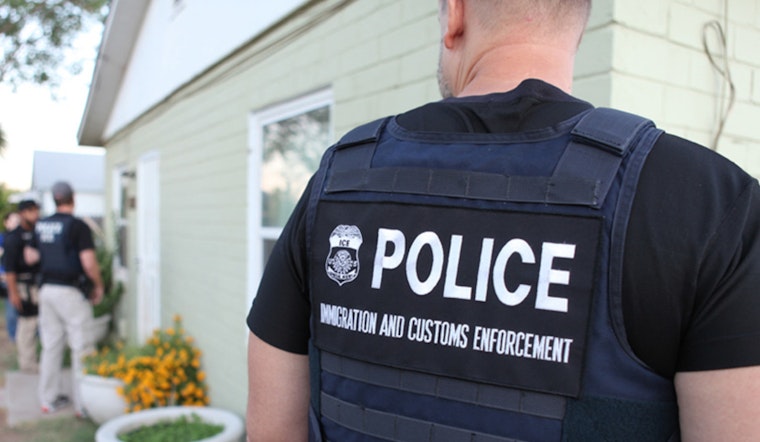
The cumulative efforts of state and local law enforcement agencies in Florida are significantly contributing to the Trump administration's agenda to ramp up deportations. According to WSVN, the number of these cooperative deals has ballooned to 506 across 38 states, from just 135 agreements in December. Florida, in particular, has been zealous in its participation, with almost half of these agreements originating from the state. Governor Ron DeSantis was prominently present alongside Homeland Security officials during a press event that highlighted an operation nabbing roughly 800 immigration arrests in under a week.
Moving to intensify their stance, the Trump administration is not shy to openly retaliate against localities that limit cooperation with immigration authorities. Trump recently issued an executive order to publicize a list of so-called "sanctuary" jurisdictions, coupled with the threat of criminal charges against officials who counter federal immigration policies. This clampdown, as per the same WSVN report, has been criticized by advocates like Katie Blankenship, immigration attorney and co-founder of Sanctuary of the South, who argues that the practice "is finding methods to terrorize communities."
Despite having approximately 6,000 deportation officers, ICE needs local help to even begin to fully realize the president's goals of mass deportations. States such as Texas and Georgia are also following Florida's lead in cementing cooperative agreements. Notably, the US News reported that Florida's participation is unparalleled, with all 67 counties' agencies participating, extending even to agencies with no apparent links to immigration enforcement, like the Florida Department of Lottery Services and the Florida Fish and Wildlife Conservation Commission.
This state and local involvement has manifested in operations like “Operation Tidal Wave,” where the Florida Highway Patrol targeted individuals in several cities across Florida. Bill Smith, president of the Florida Police Benevolent Association, told US News that most of those detained either faced final deportation orders or had outstanding arrest warrants for prior offenses. These boots-on-the-ground approaches have incited fear in local communities, as Jessica Ramírez, general coordinator at the Florida Farm Workers Association, stated to US News that “People are extremely afraid to go out and drive, afraid of the police.” These sentiments echo through the story of Chica, a Guatemalan woman whose partner was detained en route to work, despite his pending asylum application and possession of a work permit.
Critics from within law enforcement, such as Polk County Sheriff Grady Judd, have voiced their discontent, describing federal efforts as lagging and insufficient to execute mass deportations. Judd referred to recent operations as a "drop in the bucket" and expressed eagerness to cooperate but pointed out the slow pace of change in federal processes in a statement to US News.





