

























































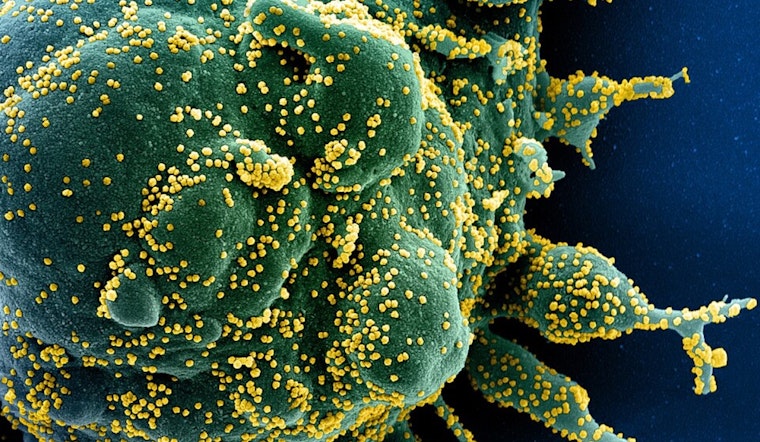
As the Golden State braces for the usual summer uptick in COVID-19 cases, a new variant identified as NB.1.8.1 is stirring concerns among public health officials. According to CALmatters, Stanford scientists confirmed the first known infection of this variant in California on April 17. It's more infectious than previous strains but with similar severity levels in symptoms, such as cough, sore throat, fever, and fatigue.
Found initially wreaking havoc in China, NB.1.8.1 has now shown its face in international travelers through airports in Washington, New York, Virginia, and California, according to the San Francisco Chronicle. Not just limited to these port cities, the strain has been detected in states like Ohio, Rhode Island, and Hawaii, where the virus has been spreading on the ground to those who meet travelers arriving from airports with reports of cases.
Moving in step with these developments is a controversial change in vaccine policy. The FDA, now under the charge of Health and Human Services Secretary Robert F. Kennedy Jr., is limiting vaccine eligibility to seniors and those at risk of severe infection. The FDA's policy shift, which excludes healthy children and pregnant women from its recommendations, is a major deviation from historical norms when the vaccine was widely offered to most over the age of 6 months. "The benefit of repeat dosing — particularly among low-risk persons ... is uncertain," FDA officials declared in CALmatters in The New England Journal of Medicine.
While the FDA narrows vaccine eligibility, a battle of variants seems to be shaping up. The previous season's vaccines were tailored against the KP.2 variant, a derivative of JN.1. However, with LP.8.1 now prevalent across the U.S., Pfizer and Moderna suggest adapting the vaccine to target this new strain might offer a stronger defense. Notably, this includes potentially covering NB.1.8.1. "The FDA will approve vaccines for high-risk persons and, at the same time, demand robust, gold-standard data on persons at low risk," explained Dr. Vinay Prasad, the agency’s vaccine division chief. An official decision on this fall's vaccine strategy is pending, per the San Francisco Chronicle.





