

























































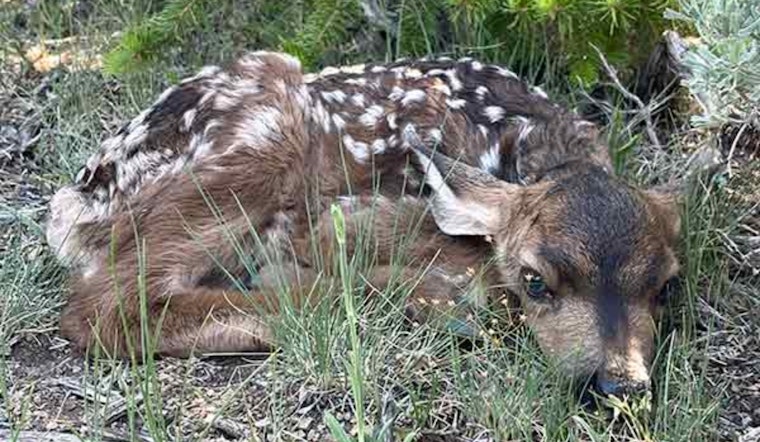
If you're planning to take advantage of the great outdoors this summer and fancy yourself a bit of an explorer amid the wilderness of Utah, think twice before you go adopting any stray 'Bambi' you find in the woods. The Utah Division of Wildlife Resources (DWR) has a stern message for hikers and campers: stumbling upon a deer fawn or elk calf doesn't mean you've found an orphan in need of rescue. These sightings are expected, especially during late May or June, and the advice is simple: keep your hands to yourself and maintain a respectful distance.
According to the Utah Division of Wildlife Resources, if you come across these baby animals, it's likely that their mothers aren't far off. These critters employ a 'hide-in-plain-sight' strategy where they remain motionless and silent, making it easy for humans to misinterpret the situation. "Newborn fawns are actually frequently alone and isolated during their first weeks of life — and that's on purpose," Dax Mangus, Big Game Coordinator for the DWR, emphasized. The wildlife agency breaks it down further, explaining the animal kingdom's clever divide-and-conquer approach to infant care, like how 'followers,' such as bison calves and bighorn sheep lambs, stick close to their moms from the start, while 'hiders,' including mule deer fawns and elk calves play it solo to stay safe from predators.
But it's not just a matter of preventing a circle-of-life moment; interacting with these young animals can lead to a host of other issues. For one, despite how cuddly they might look, trying to feed or touch a baby deer or elk screws up the natural order, and what's worse, it's illegal. In a no-nonsense tone, the Utah Division of Wildlife Resources states, "Never attempt to remove a fawn or calf from the wild or take it home." The consequences can be dire and twofold, potentially fatal for the animal and legally troublesome for offenders. A class A misdemeanor awaits those who can't resist the urge to intervene.





