

























































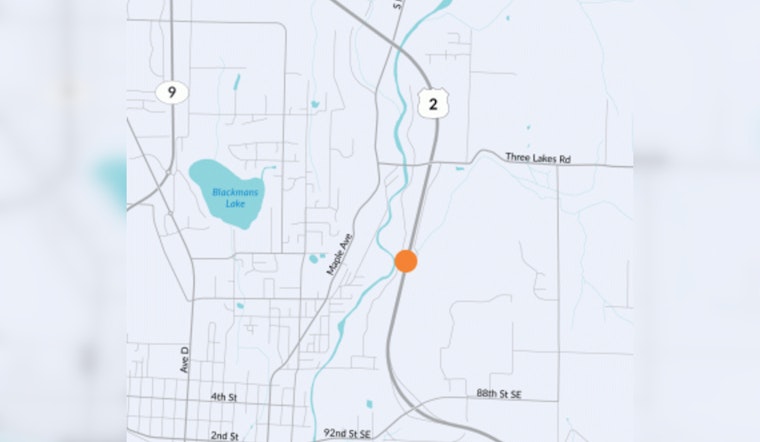
A joint endeavor between the Washington State Department of Transportation (WSDOT) and Snohomish County is set to kick off on May 27, signaling a crucial step toward enhancing fish migration in the state's waterways. The project focuses on Sexton Creek, a tributary of the Pilchuck River, and entails replacing outdated 5½-foot culverts with new structures that enable unimpeded fish movement.
Contracted crews under WSDOT's direction will put in a modern box structure beneath US 2. Meanwhile, Snohomish County will take on culvert replacements under Sexton Road with a 29-foot-wide steel arch culvert and eliminate additional barriers around the creek's confluence with the Pilchuck River. This initiative is crucial for the survival and restoration of various salmon species and steelhead, as noted by a WSDOT press release.
Travelers in the vicinity should brace for temporary disruptions, starting with the construction of a bypass road along US 2 that begins May 27. The undertaking may lead to three Saturday night full closures of US 2, nighttime lane reductions, and traffic pattern alterations. Sexton Road is expected to be closed to through traffic starting in July for a duration of approximately two months, although local residents will continue to have access to their homes.
The fish passage program, a testament to WSDOT's 30-year-long mission to foster fish passage, works hand in hand with a 2013 federal injunction propelling the department to expedite replacement of such aquatic barriers. In unison with the Washington State Department of Fish and Wildlife and local tribes, Snohomish County has been active for over 35 years in enhancing fish passage, emphasizing barrier removal and improvements since 2015. An interactive map provided by WSDOT allows the public to view updated and remaining barriers within the injunction boundary. The two-part project is funded through a combination of state gas tax, federal, and county sources, totaling an estimated $9 million for the US 2 portion alone.
Through these concerted efforts, the goal is to ensure that indigenous fish species such as Chinook, coho, pink and chum salmon, and steelhead can traverse their native streams unabated, thereby supporting both the environmental and cultural fabric of the region.





