

























































California-based FPI Management, along with the owners of five Washington-state apartment complexes, are facing a lawsuit from Attorney General Nick Brown. The suit, filed in Snohomish County Superior Court, accuses them of unfair and deceptive behavior that has affected hundreds of senior residents. According to a statement from the Attorney General's Office, the properties were marketed to low-income tenants over the age of 55, with crucial information about future rent calculations and hikes supposedly withheld.
The state's top lawyer characterizes the situation as particularly distressing for older citizens who, once they've inked a lease, find moving not just costly but also taxing physically. "Housing is particularly important for older Washingtonians, and it’s hard for them to move once they’ve signed a lease," Brown said, as reported by the Attorney General's Office. "It’s egregious to convince vulnerable populations they’re getting quality living when in reality they are stuck with properties in disrepair that also end up costing more than they expected over time." The defendants have also allegedly misrepresented the condition of the properties, promoting them as "luxury" and "resort style" living spaces, but tenants often encountered uninhabitable conditions upon arrival.
The complaint outs that the defendants were part of the Low-Income Housing Tax Credit Program, bringing them significant tax breaks for providing units to tenants below certain income levels. Notably, rent for these units is set by the U.S. Department of Housing & Urban Development based on Area Median Income rather than tenants' fixed incomes, making it hard for many to afford other essentials like food and medical expenses. The lawsuit alleges that this AMI basis was not properly explained to potential renters.
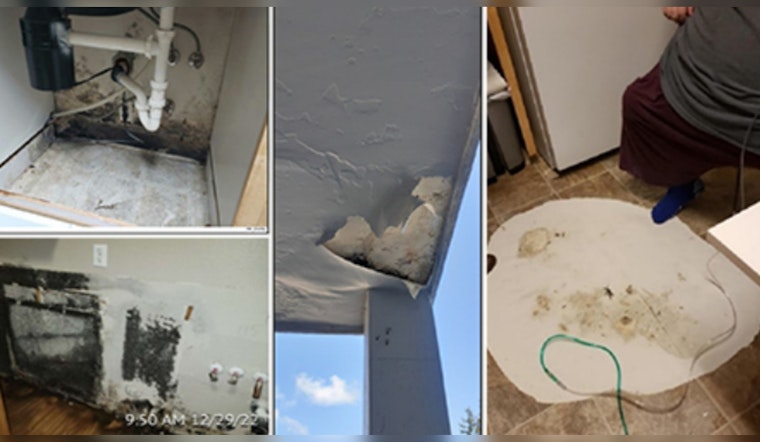
Moreover, claims of secure and well-maintained facilities fall flat as residents have reportedly faced safety issues. Many buildings lack adequate monitoring, leading to numerous reports of trespassing and other crimes. Parking lots are described as being plagued by prowling, theft, and vandalism. In an array of photos evidencing the subpar living conditions, one can see black mold encroaching on walls, damaged ceilings revealing more mold, a refrigerator standing next to a large puddle of dirty water, documenting both disrepair and neglect.
Seeking justice for impacted tenants, the Attorney General's lawsuit calls for an injunction to stop the deceptive practices, restitution for those deceived, and an enhanced civil penalty of $12,500 for each Consumer Protection Act violation due to the exploitation of vulnerable seniors. In handling this case, Assistant Attorneys General Anthony Thach and Emily Nelson, along with Senior Investigator Jennifer Treppa and Paralegal Logan Young have taken point, aiming to protect some of the state's most susceptible residents from predatory real estate practices.



