

























































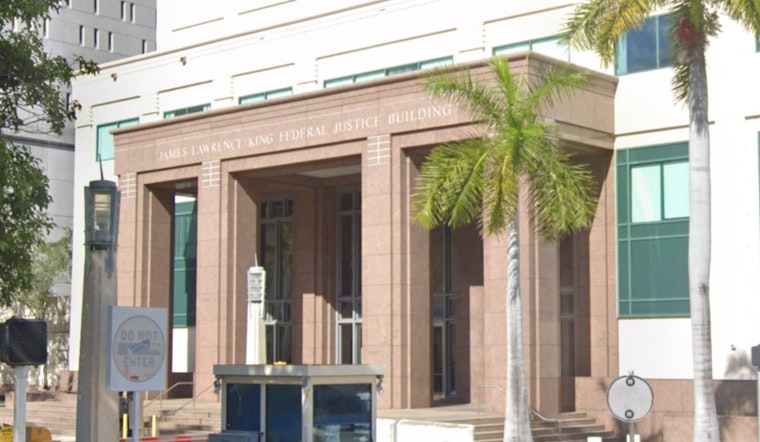
The U.S. government has taken a strong stance against an alleged Medicare fraud scheme. AIMA Business and Medical Support, LLC, a company involved in medical billing and compliance services, stands accused of wrongly billing Medicare for genetic tests that were deemed unnecessary. According to a press release from the United States Attorney's Office for the Southern District of Florida, the false claims were submitted over a span of one year, leading to Medicare being falsely billed for over $15 million.
AIMA, registered in Florida as an LLC, serviced clients throughout the U.S., doing business from a distance with its CEO in the United Kingdom and its workforce based in India. Despite the geographical spread, the company eventually became embroiled in controversy over services provided to Selecta Laboratory, operating out of Miami. The claim, filed under the False Claims Act, asserts that AIMA "billed Medicare Part B approximately $ 15,178,946.00 for genetic tests on behalf of Selecta," even though they should have known the tests were not medically necessary, as outlined on the Justice Department's website. Medicare guidelines stipulate that diagnostic tests must be ordered by the patient's own treating physician to be considered for coverage.
Acting Special Agent in Charge Jesus Barranco of the U.S. Department of Health and Human Services, Office of Inspector General, alongside U.S. Attorney Hayden P. O’Byrne, announced the complaint. The Assistant U.S. Attorney Clarissa Pinheiro was assigned to handle the case, with HHS-OIG owning the investigation process. This moves to illustrate the government's continued dedication to weed out healthcare fraud, utilizing the False Claims Act as a significant tool in holding parties accountable for misdirected healthcare funds.
The government's allegation of AIMA’s malpractice, as yet, is not equivalent to a verdict of guilt – the charges remain unproven until judged in court. However, the implications of such misconduct, if proven, are significant for Medicare, which relies on the integrity of service providers to uphold the quality and appropriateness of healthcare services financed by taxpayer dollars. As emphasized by the U.S. Attorney's Office, the public is encouraged to report any suspicions of fraud or abuse to the HHS through their tip hotline, indicating the weight of communal vigilance in this battle against exploitation.
Those interested in the legal momentum of this case can point their browsers to the Southern District of Florida's District Court website or access the PACER system, where case number 25-cv-22507 can be found.





