

























































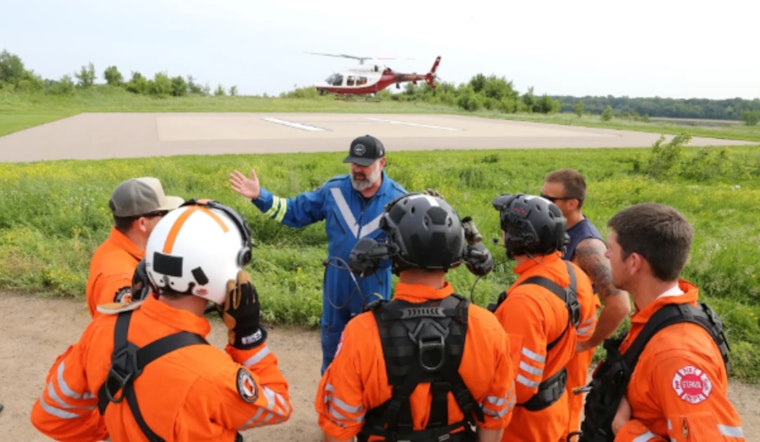
The Minnesota State Patrol's latest addition to its aerial fleet, a Bell 429 helicopter, is poised to significantly enhance public safety across the state, as reported on June 25. Equipped with dual engines for increased reliability and a side-mounted hoist system for swift rescues, the helicopter streamlines operations ranging from search and rescue to traffic law enforcement. State Patrol Col. Christina Bogojevic underscored the aircraft's pivotal role, saying, "This helicopter gives us eyes in the sky to end it safely," in a mission to minimize crashes and injuries, according to recent coverage.
Notably, the Bell 429 supersedes its predecessor's capabilities, for it can safely return to an airport even if an engine fails, whereas the older Bell 407 would require an immediate emergency landing, Craig Benz, chief pilot of the Minnesota State Patrol’s flight section explained, highlighting the new model's robust safety features, he detailed how the new chopper's technology and equipment, such as cameras and a spotlight for nocturnal missions, cater specifically to Minnesota's unique operational needs, funded by a substantial $14.4 million allocated by the Minnesota legislature in 2023. The Minnesota Air Rescue Team (MART), comprising State Patrol pilots and St. Paul Fire Department personnel, will handle rescue missions, benefitting from the helicopter's enhanced capacity to retrieve individuals from challenging locations promptly, as rescues have now been reduced to a 10 to 15-minute process, a significant improvement over the previous hour-long operations.
Within the upper Midwest, Minnesota distinguishes itself as the singular state where the state patrol wholly owns and operates its helicopter service without contracting, unlike its neighbors Wisconsin, Iowa, and the Dakotas which rely on contracted helicopters or fixed-wing alternatives. The Bell 429's cutting-edge technology includes an advanced autopilot that assists pilots, though as Benz notes, "You’re not just cruising. You’re managing systems, monitoring airspace and always making decisions," pointing to the necessity for skilled pilots despite technological advancements; he remarked on the importance of precision and alertness when lives hinge on prompt and efficient response.
While the innovation symbolizes a stride forward in public safety, the achievement is collective, with Benz emphasizing the collaboration that materialized the helicopter project—acknowledging the tireless effort of lawmakers and Department of Public Safety leaders, "It took a lot of hands to bring this to life," he said, reflective of the concerted spirit that has culminated in this ready-to-serve addition to Minnesota's emergency response apparatus.




