

























































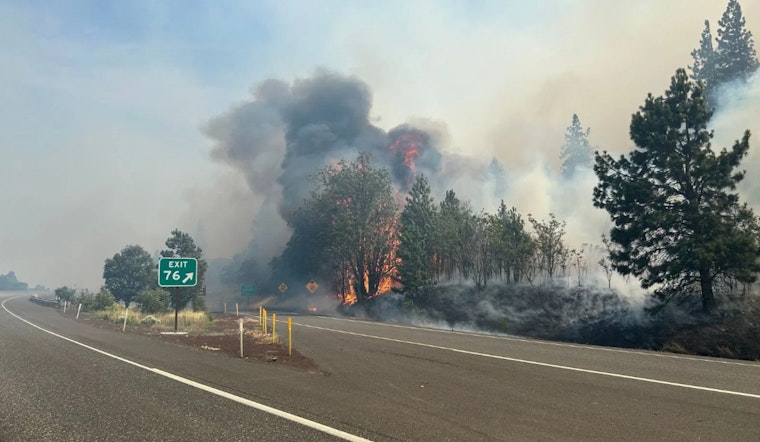
The Rowena Fire near The Dalles continues to devastate as officials report at least 49 homes destroyed, with the blaze having consumed approximately 3,831 acres. The Wasco County Sheriff’s Office, amidst ongoing damage assessments, anticipates the number of homes lost to potentially rise, as reported by KPTV.
Ignited on Wednesday, amid strong 30 mph winds, the wildfire has presented challenges to the more than 450 fire personnel. According to KGW, the firefighters' efforts have been aided by 14 helicopters, however, the fire remains 5% contained as per the latest update Friday evening. Wasco County Sheriff Lane Magill, described the ongoing situation as the "worst incident I've seen in 23-and-a-half years being in law enforcement."
Evacuation orders still hold sway over the region, with the latest figures showing a decrease in Level 3 orders from 824 to 575 homes. A total of 1,718 homes linger under Level 2 evacuation notices, and 1,547 under Level 1, affecting about 3,000 people. In his media briefing, Sheriff Magill acknowledged the hardships of relocation, especially given Rowena's status as a large retirement community, "Moving people and stuff like that, of course, in an incident that's rapid and evolving — especially like this — was extremely difficult," he told KGW.
The weather remains a concern with continued 20-30 mph winds in the area complicating containment efforts. Craig Pettinger, ODF Team 2 Deputy IC, expressed apprehension about the current wildfire season. “It’s very early in fire season for us to be dealing with a large, fast-moving fire like the Rowena Fire, and deploying one of our incident management teams,” Pettinger said, according to KATU News. He added, “It doesn’t bode well for what’s ahead of us knowing we already expect an active fire season. We have a lot of fire season ahead of us, and long seasons take a toll on our firefighters and communities across the state.”
While the magnitude of the destruction is coming into sharper focus, and with Highway 30 in the fire zone still closed, residents are left wondering about the long-term ramifications of increasingly severe fire seasons on their communities and livelihoods.





