

























































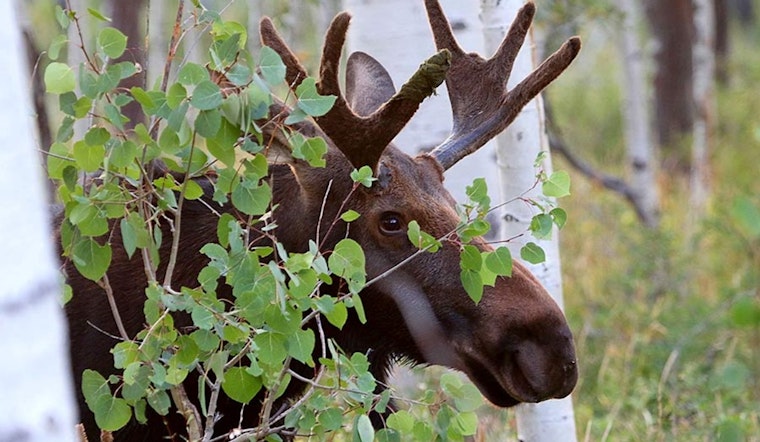
Utah's moose population, estimated to be between 2,500 and 3,000, shares their habitat with hiking and mountain biking enthusiasts along the Wasatch Front and in northern and northeastern parts of the state. These large mammals, the biggest in the deer family, are generally peaceful but have been known to endanger humans and their pets when they feel threatened. Heading into the summer months, when encounters with moose become more frequent due to outdoor activities, outdoor enthusiasts must understand how to avoid conflicts with these wild animals.
According to the Utah Division of Wildlife Resources, moose, which can weigh up to 1,000 pounds and stand 6 feet tall at the shoulder, can be particularly aggressive when they perceive a threat. Each year, wildlife agencies across the U.S. report numerous injuries caused by moose, which occasionally exceed those inflicted by bears. Rusty Robinson, the Utah Division of Wildlife Resources' Once-In-A-Lifetime Species Coordinator, revealed, "In my years of working with wildlife, ... the only species that I've had turn and come back at me was a moose," as per Utah Division of Wildlife Resources. He underscored that despite being herbivores, moose should not be underestimated.
To prevent unwanted run-ins with these giants, hikers and bikers need to recognize moose behavior that suggests agitation or aggression. Some telltale signs include the lowering of their head, hairs standing up on their neck, licking of their snout, and pinning their ears back. The Utah Division of Wildlife Resources has specified that moose are especially protective during the late spring when cows are with their calves, and in the fall, when bull moose are more territorial due to the breeding season. Additionally, dogs are often mistaken for predators by moose, provoking aggressive responses toward both the pet and its owner.
The Utah Division of Wildlife Resources advises that if one encounters a moose, they should always give it plenty of space and avoid approaching or attempting to feed it. Dogs should be kept leashed and under control as per Utah law, which prohibits dogs from chasing or harassing protected wildlife. When faced with a moose, staying calm, talking to make one's presence known, and retreating slowly are the recommended responses. In situations where a moose charges, finding a solid object like a tree to hide behind, or seeking the shelter of a vehicle or building, may provide safety. Rusty Robinson told the Utah Division of Wildlife Resources, "If you give moose plenty of space and don't try to get too close, it will help keep you and them safe." He adds that numerous moose are relocated from urban areas each year, and keeping a respectful distance is paramount for everyone's safety.




