

























































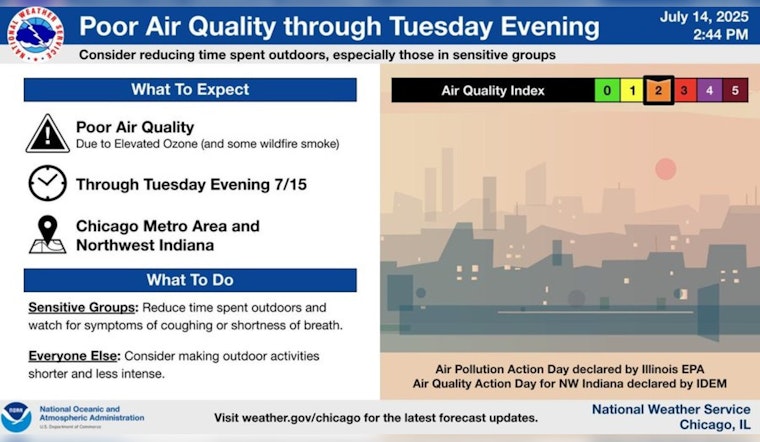
The skies over Chicago have taken on a grim shade as air quality dips to concerning levels for the second straight day. An air quality alert remains in effect across the city and parts of northwest Indiana, according to the National Weather Service. Despite the urgency this situation imparts, it's crucial not to succumb to metaphors. Instead, let’s discuss the bare facts: Lake, McHenry, Kane, DuPage, central Cook, Kendall, Grundy, and northern Will Counties in Illinois all find themselves enveloped by this alert. Across the border in Indiana, Lake, Porter, northern LaPorte, and Newton Counties share the same fate. The source of this worrying air quality? Fires raging in Canada, which have cast a smoky pall across vast stretches of North America, as The Chicago Sun-Times reports.
Chicago’s air quality index paints a stark picture, with a PM2.5 reading of 115 early in the morning, according to AirNow.gov. This places Chicago air in the "Unhealthy for sensitive groups" category, a status that beckons particularly at-risk individuals—like those with respiratory conditions—to reduce the intensity of, and to possibly even limit outdoor activities to avoid exacerbating their health. Hot, humid air, wedded with high temperatures climbing to the low 90s, only compounds the health risk. Indeed, according to an NBC Chicago article, the Illinois Environmental Protection Agency has responded by declaring an "Air Pollution Action Day," urging residents to take concrete steps to cut down their pollution contributions.
Amid rising temperatures and worsening air quality, the Illinois EPA has pinpointed several measures citizens can adopt to mitigate their impact, jarring us with a reality that now seems inextricable from the season. We are told to cut driving, conserve energy, and abandon the use of gasoline-powered lawn equipment, an eerily mundane checklist in response to an increasingly frequent environmental ordeal. Kim Biggs, information officer with the Illinois EPA, provided the reason behind the alert, highlighting a combination of factors like the Canadian wildfires, boosted levels of ozone, particulates, and the greater heat and stilled winds of summer, in a statement to The Chicago Sun-Times.
While the battles against the flames are fought in the far-off provinces of Manitoba, where a state of emergency persists well into August, the repercussions ripple outward, affecting daily life in the heartland of America. Respiratory issues such as shortness of breath and coughing are the enemy invaders at the gates of the sensitive groups’ well-being, prompting advisories to reduce time spent outdoors. The PM2.5 particulates, representing one of the sinister culprits, are fine, inhalable particles that slip, unnoticed, into the lungs of the young and elderly alike. As the Illinois Environmental Protection Agency emphasizes the necessity of limiting prolonged outdoor activity for "active children and adults, especially people with pulmonary or respiratory disease such as asthma," it seems all the more urgent for communities to heed these warnings, revealed in an NBC Chicago report.





