

























































In a move that has sparked widespread reactions across the political landscape, the Department of Justice has launched a lawsuit against the State of Minnesota, targeting legislation that provides in-state tuition fees to undocumented residents. The DOJ's legal action specifically challenges the provisions under the Minnesota Prosperity Act of 2013 and the recently enacted North Star Promise tuition-free program of 2023. These programs have allowed undocumented students, who are residents of Minnesota, to pursue higher education at a cost equitable to that of legal residents.
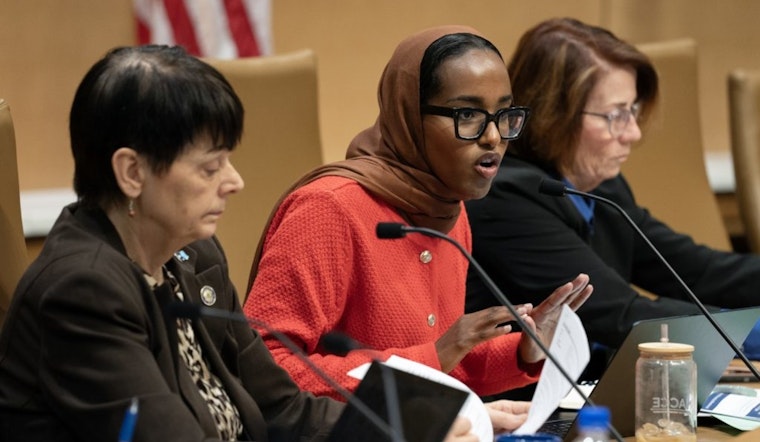
The legal tussle, placing the DOJ on one side and the State of Minnesota on the other has ignited a fiery response from Senator Zaynab Mohamed of the DFL-Minneapolis, who did not mince words when describing the federal government's lawsuit as symptomatic of what she perceives to be an "extremist, anti-immigrant agenda"; she adds this lawsuit demonizes communities under the guise of a political power play, according to a statement released on her official website.
Senator Mohamed's condemnation was unequivocal, with her firmly situating the action within a context of political maneuvering by known figures such as former President Donald Trump and his advisor Stephen Miller. The Prosperity Act, once a bipartisan effort embraced by elements across the political divide including the Minnesota Chamber of Commerce, now sits at the center of a controversy after a decade of quiet success, the senator observed, pointing to a shift in the political winds more so than any changes on the ground amongst those who benefit from the law.
"The lawsuit is further proof that their mission has never been about a secure border, 'criminals' or 'freeloaders,'" Mohamed stated, emphasizing the long-standing contributions of the immigrant families in Minnesota; the senator upholds these individuals as "model Americans," disregarded only by the "most xenophobic ideologues" in her statement hosted on the Senate DFL website. In the assertion of Senator Mohamed's confidence in the Attorney General's capacity to handle this legal battle, is an implicit declaration of the legitimacy of the Prosperity Act and the expectation that it shall endure despite the current administration's legal scrutiny.





