

























































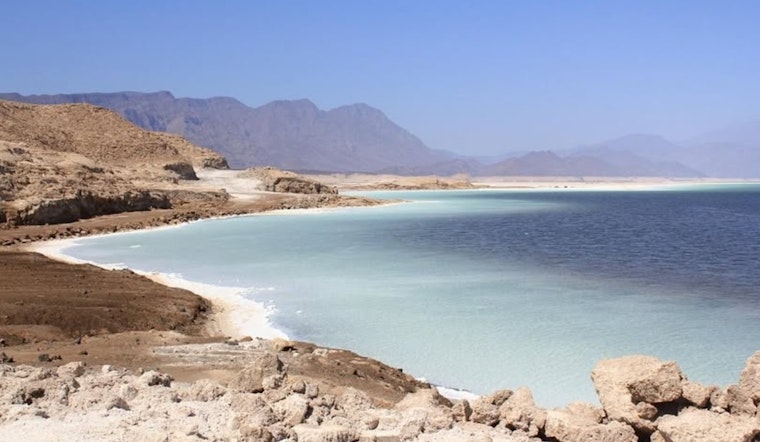
In the latest installment of the social media sensation 'Salty Sundays', Great Salt Lake State Park & Marina squared off the natural marvels of Utah's own Great Salt Lake against Djibouti's Lake Assal. The weekly series takes a closer look at some of the world's saltiest bodies of water, and this past Sunday spotlighted the striking differences between these two saline giants. As per Great Salt Lake State Park & Marina, even the saltiest of us might be surprised to discover how these bodies of water measure up.
Lake Assal, usurping the sixth spot for salinity, boasts an average salinity of around 34.8%, potentially reaching up to a skin-puckering 40% in certain areas. This makes it roughly ten times saltier than the ocean – an environment where few organisms can manage, and making it the most saline body of water outside of Antarctica. The Great Salt Lake, with its fluctuating salt levels ranging from 5% to 27%, doesn't quite match up. However, it’s noteworthy that Great Salt Lake, depending on the arm, may swing wildly in salinity, as assured by the Great Salt Lake State Park & Marina.
When it comes to size and depth, the differences are again profound. Lake Assal, nestled in the desert climes of the Afar Depression, is relatively compact but boasts the lowest point in Africa at 155 meters below sea level. Meanwhile, the vast but shallow Great Salt Lake has a much larger surface area but averages only about 16 feet deep, as observed by the state park's marina social media.
Life in Lake Assal's hyper-saline waters is nearly nonexistent, save for a community of specialized bacteria. Conversely, with a bustling metropolis for brine shrimp and brine flies, the Great Salt Lake supports a vibrant ecosystem that in turn feeds millions of migratory birds. "So, we've got a whole ecosystem party happening," notes the Great Salt Lake State Park & Marina, a quiet, mineral-infused retreat by comparison to Lake Assal.





