

























































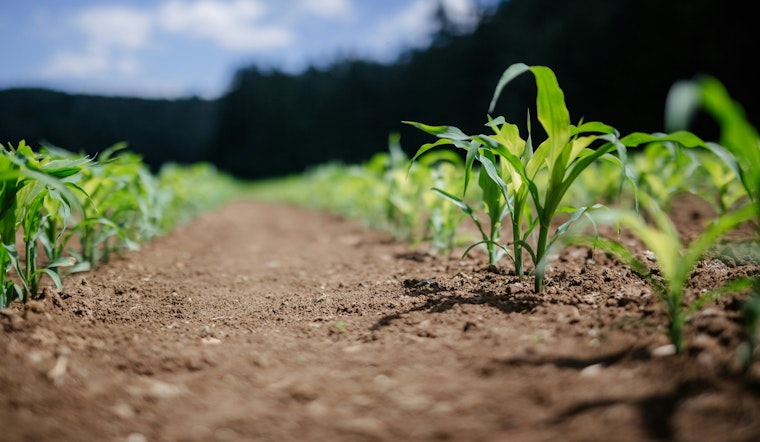
In a crucial step forward for agricultural efficiency and environmental responsibility, researchers at the University of Minnesota have fine-tuned a well-established soil testing tool to better guide farmers on corn nitrogen levels. The enhanced Pre-Sidedress Nitrate Test (PSNT) now gives more accurate measurements that are vital for optimizing crop yields and mitigating excess nitrogen use. This advancement, borne from the analysis of 34 field trials across the Gopher State, was reported by the University of Minnesota News.
As per the findings that have just been published in the Soil Science Society of America Journal, applying nitrogen at 20 parts per million in the soil can achieve 97% of the maximum corn yield. This figure was derived from a comprehensive series of tests on various soils and conditions throughout Minnesota. The researchers underscored the need for such precise guidelines in instances where spring rainfalls interfere with pre-plant fertilizer strategies. They observed that, crucial to making the right call on nitrogen levels, the PSNT can shift with spring precipitation: it was higher during dry spells at 21.5 ppm, as opposed to wetter conditions that saw a lower threshold at 17.4 ppm.
In terms of practical application, when the PSNT readings are below the suggested 20 ppm, farmers will need about 12.3 lbs of additional nitrogen per acre for each ppm shortfall to hit the crucial threshold. The updated PSNT thus becomes particularly handy when wet conditions undermine pre-plant nitrogen applications or when there's a suspicion of significant residual nitrogen, offering a real-time check on the soil's nutrients. In a statement released by the University of Minnesota News, Emerson Souza, a lead researcher in the study, stressed the importance of real-time data. "Nitrogen decisions are always a moving target, especially when spring weather doesn’t cooperate. The PSNT gives farmers a way to read the field's nitrogen status in real time, rather than guessing, and allows us to adjust quickly when the soil is coming up short," he explained.
While presenting these findings, the collaborators call for further investigation to fine-tune the guidelines for actual nitrogen application under varying climatic and soil conditions. Behind this project stands a partnership led by the University of Minnesota alongside the Minnesota Department of Agriculture, financed by the Clean Water, Land and Legacy Amendment Fund. Emphasizing the collaborative nature of the research, Professor Fabian Fernández, who originally conceptualized the project, told University of Minnesota News, “This project highlights the value of collaborative work, goodwill, trust and data sharing to accomplish a common objective.”
The University's College of Food, Agricultural and Natural Resource Sciences (CFANS), which played a key role in carrying out the research, champions innovation and scientific application for real-world problems. CFANS’s commitment to combining education with experiential learning is evident through its vast resources, including academic departments, research and outreach centers, and the Minnesota Landscape Arboretum. With this recent study, CFANS continues to showcase its dedication to sustainable agriculture and practical science that supports farmers and the environment alike.





