

























































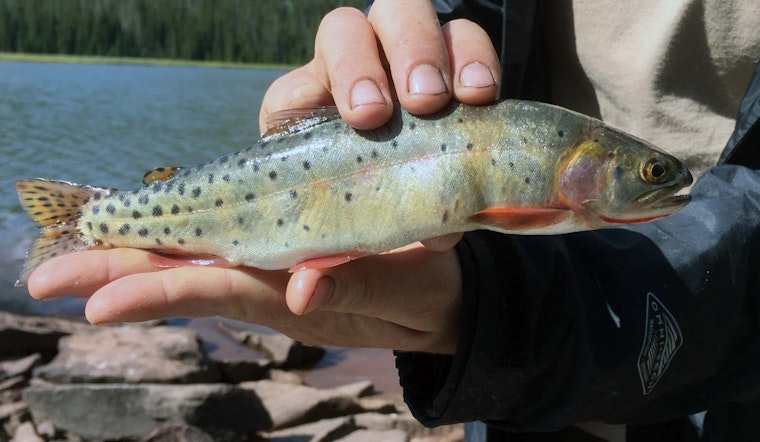
The Utah Division of Wildlife Resources is once again joining forces with the Ashley National Forest to implement vital waterbody treatments in the High Uintas, marking the fourth year of a concerted effort to rehabilitate populations of native Colorado River cutthroat trout. According to Utah DWR, these treatments are part of a longstanding project to target specific drainages for the removal of non-native fish species, using a natural piscicide, rotenone, which is deemed safe for humans, pets, and other wildlife.
Expeditions to treat two drainages will begin on August 4 and continue through August 7 in the Fall Creek drainage, followed by a single-day session on August 26 in the South Fork Sheep Creek. The treatments are a necessity to eventually ensure a robust future for the indigenous trout species, before non-native fish, left unchecked, could potentially fully replace cutthroat populations in under two decades. However, during the time of the treatments, the public has been advised to stay out of these areas, amply marked for safety and informational purposes.
These actions are a continuation of a more than 20-year journey towards native species revitalization, with DWR Northeastern Region Aquatics Manager Natalie Boren stating, "Over the past 20 years, we have made significant progress on Colorado River cutthroat trout restoration in northeastern Utah," as obtained by Utah DWR. The current project is pivotal, bringing the conservation team within a seven-year window of meeting their initial restoration goals.
Following the treatment protocols, the South Fork Sheep Creek will be withheld from restocking until treatments are finalized, likely next summer. Conversely, success in the Fall Creek drainage could lead indisputably to an earlier introduction of Colorado River cutthroat trout in the 2026 timeframe. DWR Regional Sportfish Biologist Carsen Hinkhouse underscored the targeted nature of the project: "The Uinta Mountains host over 1,000 lakes and hundreds of miles of stream," Hinkhouse told Utah DWR. "Our efforts are targeted at restoring Colorado River cutthroat trout in a handful of these waters."





