

























































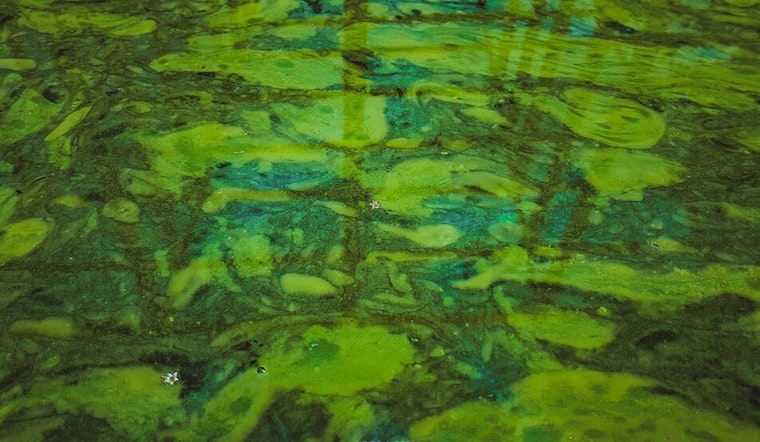
Residents and visitors along parts of the Jordan River and its canals are being told to exercise caution. The Salt Lake County Health Department (SLCoHD) released a Warning Advisory after confirming the presence of a harmful algal bloom, or HAB, stretching from the southern county line to around 9000 South, and in connected canals as far north as 3000 South. While kayaking still gets the green light, direct contact with the water where visible algae is present, well, is off-limits.
Even though the test results to fully ascertain the levels of toxins are yet pending, local health officials are clear: Don't swim in these waters; if you catch fish, clean them thoroughly and toss the guts; keep your pets far away from the water, and seriously, don't drink it. As obtained by the Salt Lake County Health Department, the advisory follows the spread of a larger algal bloom plaguing Utah Lake, raising concerns about water safety in the area.
No closure orders have been issued thus far, meaning the public can still access the water bodies within Salt Lake County under the provided guidelines. Continuous monitoring efforts by the SLCoHD and the Utah Department of Environmental Quality aim to keep a vigilant eye on the situation, and they'll be sure to update any advisories as things evolve.
The situation sheds light yet again on the complex dynamics at play in our natural water systems. Rapid growth of algae, especially fueled by high nutrient levels from sources like fertilizer runoff, is to blame. This isn't your garden-variety pond scum; these blooms can house cyanobacteria, literally known as blue-green algae, capable of producing toxins that are a serious no-go for humans and animals alike. And even if you've been exposed, the symptoms, ranging from headaches and fevers to nausea, are anything but a walk in the park. According to the Salt Lake County Health Department, anyone believing they've come into contact with these toxic algae should immediately contact the Utah Poison Control Center or their healthcare provider.





