

























































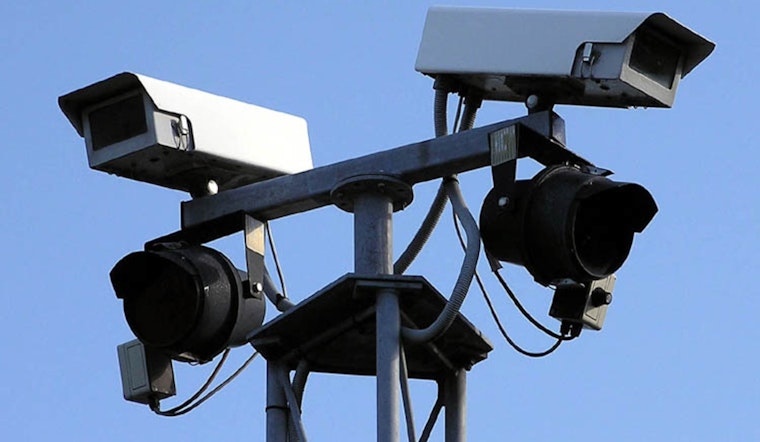
Communities across the nation are grappling with the ramifications of automated license plate readers (ALPRs) — a technology that law enforcement champions as an effective tool for safety, but which critics argue could infringe on Fourth Amendment rights. Last month, Greers Ferry, Arkansas, became a focal point for privacy concerns when resident Charlie Wolf took issue with a license plate camera he claimed was unjustifiably surveilling his property, according to the Chicago Sun-Times. Despite Police Chief Kallen Lacy's assertion that wide use equates to constitutional fidelity, residents remain skeptical.
Recent investigations by CBS News have highlighted situations where ALPRs get it wrong, leading to alarming consequences. As reported on July 24, 2025, Brian Hofer and his brother were held at gunpoint due to an erroneous ALPR flag that mistakenly identified Hofer's vehicle as stolen. This incident is part of a systemic national issue, with other instances leading to wrongful stops and the technology's misuse, like stalking former partners, as told by CBS News.
Enhanced surveillance brought by ALPRs spotlights a fundamental tension between security measures and individual freedoms. The systems are capable of scanning any license plate within their operational field, storing vast amounts of data, and allowing tracking across jurisdictions without a warrant, based on statements made by the Institute for Justice. Their widespread adoption compounds privacy concerns, sparking movements such as the one in Scarsdale, New York, where local officials canceled their contract with Flock Safety after public outcry and over 400 signed petitions.
Errors by ALPRs are not uncommon, and the reasons behind them are varied. Sometimes, numbers or letters from the plates are misread by software, while other errors are a product of human or administrative oversight. One egregious example involved a Colorado family who were pulled over at gunpoint due to a mistaken vehicle identification, which concluded with a $1.9 million settlement with the city of Aurora, as investigated by CBS News. Privacy advocates, like Hofer, now an executive director at Secure Justice, argue that the potential error rate coupled with billions of daily scans could lead to significant abuses.
While some law enforcement representatives hail ALPRs as indispensable in solving serious crimes, the ACLU cautions that such technology could lead to constitutional hazards. Despite the widespread application, there remains an absence of a federal framework to regulate ALPR use. High-profile lawsuits in places like Norfolk, Virginia, and Illinois are emblematic of the mounting challenge to strike a balance between surveillance for public safety and personal privacy protections.





