

























































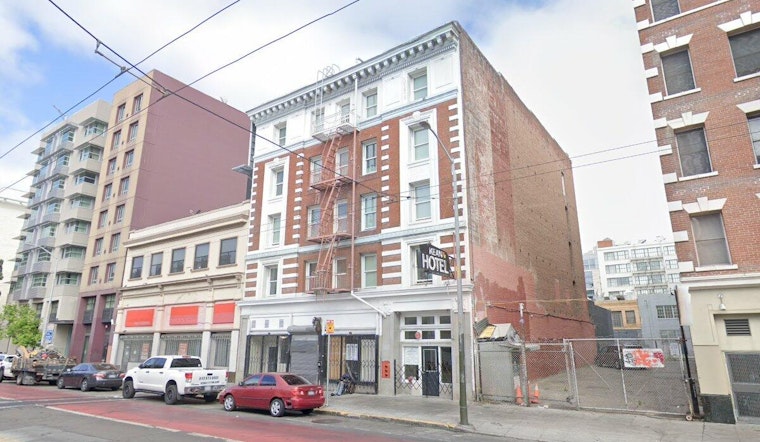
Mayor Daniel Lurie on Thursday celebrated the opening of three recovery-focused interim housing programs that will begin serving clients immediately and add roughly 200 beds to the city’s continuum of care for people experiencing homelessness and substance use disorders.
Three new recovery and treatment centers will start serving clients — adding about 200 new beds for San Franciscans on the path from crisis to stability.
— Daniel Lurie 丹尼爾·羅偉 (@DanielLurie) August 20, 2025
These new programs will provide everything from short-term care to long-term recovery housing.
This is part of our… pic.twitter.com/C26qlWTnyV
Why it matters
The new sites — the Eleanora Fagan Center, Hope House and Wells Place — are central pieces of Lurie’s “Breaking the Cycle” initiative to pair housing with onsite treatment and supportive services, officials say. The move is intended to shorten the time people spend on the streets, connect them to health and behavioral supports, and provide longer-term, drug-free post-treatment housing for those who complete residential programs.
What’s new
According to the mayor’s office, the Eleanora Fagan Center at 1018 Mission Street has already started serving clients with about 70 short-term health respite beds; Hope House at 226 Sixth Street is scheduled to open with roughly 60 beds on Sept. 2; and Wells Place at 3110 Octavia Street will add about 65 beds for up to two years of drug-free recovery housing when it launches in early September. The Salvation Army will operate Hope House and Wells Place, while Westside Community Services will operate the Eleanora Fagan Center, per the city announcement.
City officials framed the openings as filling gaps across a spectrum of needs — from immediate stabilization to post-treatment housing — and said onsite services will include case management, behavioral health support, peer services and housing navigation. The mayor’s release also notes the sites will follow HSH and DPH “Good Neighbor” policies to address community concerns.
Context and funding
The openings build on a string of recent moves by the administration to expand recovery and treatment capacity, including a prior April expansion of more than 279 treatment and recovery beds and a new Breaking the Cycle Fund seeded with private commitments. Those earlier steps are described in city statements as part of a broader push accelerated by an emergency ordinance aimed at the fentanyl crisis that allowed the administration to fast-track some of these openings.
Critics and some community members have pushed back on how and where new services locate, and the city’s history of contested siting decisions remains a factor as these programs ramp up. In March, San Francisco shelved plans to open a separate behavioral health center at 1125 Mission Street after strong neighborhood opposition — a reminder that adding services can be politically fraught even when the stated goal is reducing street suffering and drug harms.
What supporters say
City and agency leaders pictured the launches as compassionate and evidence-based. “By pairing housing with onsite treatment and supportive services, we are breaking the cycle,” DPH Director Daniel Tsai said in the city announcement, while HSH Executive Director Shireen McSpadden called the openings “a compassionate step forward” toward stability for people exiting homelessness.
Local nonprofit partners also emphasized accountability and abstinence-based options: The Salvation Army’s program lead described the sites as offering “the perfect blend of opportunity and accountability” for people seeking recovery, per the city statement.
Implications and questions
The openings expand capacity and give the city more programmatic options, but the real test will be whether the sites reduce street exposure to open-air drug markets and help participants secure lasting housing. Implementation hurdles include staffing, clinical continuity, neighborhood relations, and whether the accelerated procurement and funding approaches used by the administration remain politically and legally sustainable.
Observers will also be watching whether these programs produce measurable declines in overdose calls, visible drug activity, and chronic street homelessness in the neighborhoods involved, and whether similar models are replicated elsewhere in the city.




