

























































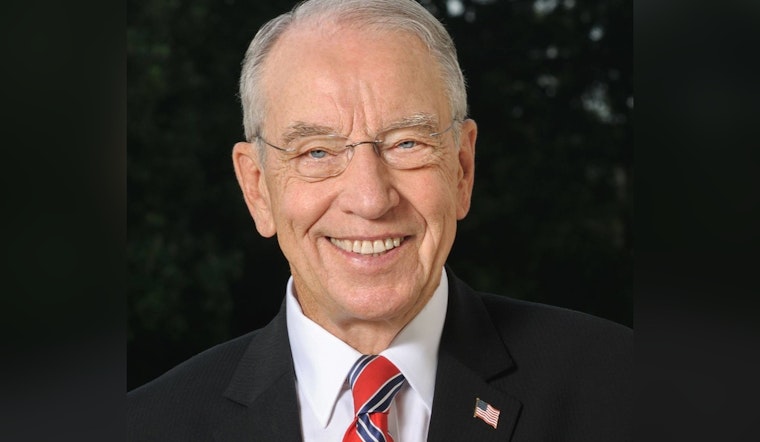
In a bipartisan push to alleviate the recurring specter of government shutdowns and underscore fiscal responsibility, Senators Chuck Grassley (R-Iowa) and James Lankford (R-Okla.) have reintroduced the Prevent Government Shutdowns Act to prevent such impasses and apply pressure on Congress to complete appropriations, as outlined in a release on Grassley's official Senate page.
Calling this legislative move a service to the people who depend on federal services and pay taxes, Senator Grassley highlighted the financial toll of government shutdowns, stating "It costs money to shut the government down and costs money to open it back up," implying that the interruption of services is a disservice to taxpayers and, to counteract this, the bill would tether lawmakers to Washington until an acceptable funding solution is found which would essentially make Congress remain in session, ensuring the continuance of operations and services critical for Americans. Lankford echoed this sentiment, focusing on the need to address the nation's swelling debt, which has surpassed $37 trillion, criticizing government shutdowns as destructive rather than constructive to fiscal stability and advocating for continued negotiations in the Capitol until budget agreements are locked down.
The legislation gained support from other Republican Senators, including John Barrasso (R-Wyo.), Steve Daines (R-Mont.), and several others, with a similar measure introduced in the House by Representative Jodey Arrington (R-Texas). The Prevent Government Shutdowns Act stipulates that if budget work is incomplete by the fiscal year's end, an automatic continuing resolution would come into effect, keeping the government running on a series of 14-day terms based on prior fiscal year spending levels, thus avoiding a shutdown and ensuring continuity of government operations.
Moreover, the bill introduces a suite of restrictions to foster accountability, including bans on taxpayer-funded travel allowances for members of Congress, White House Office of Management and Budget staff, and committee personnel, among others; and it places limits on the use of campaign funds for supplementing official duties or travel expenses, the legislation, as restrictive as it seems also forbids motions to recess for more than 23 hours, and other votes except on appropriations or mandatory quorum calls would also be prohibited, after 30 days under a continuing resolution certain expiring authorizations and nominations for high-level positions may be considered, but this can be overridden only by a two-thirds majority and for no more than a week at a time.





