

























































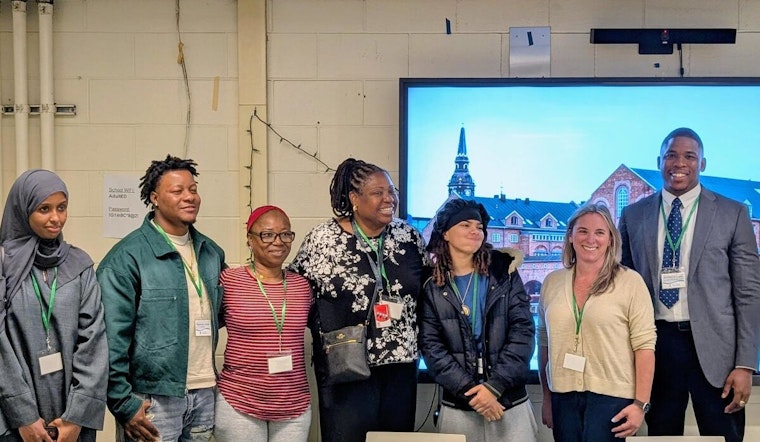
In a city-wide acknowledgment of foundational education's importance, Boston's Mayor Michelle Wu, along with the Office of Workforce Development, declared last Sunday until tomorrow as Adult Education and Family Literacy Week.
Mayor Wu emphasized that “Literacy is the foundation for learning across every generation,” acknowledging the intergenerational impact of educational access, according to a report by the City of Boston. The Mayor and city officials, including Deputy Chief of Worker Empowerment Cabinet Rashad O. Cope, highlighted various no-cost programs available to Boston residents. These include Adult Basic Education and English for Speakers of Other Languages (ESOL) classes, which are offered at flexible times accommodating those with full-time jobs.
Superintendent Mary Skipper of BPS commented on the initiative, stating, “Our adult education and family literacy programs meet individuals where they are by offering the flexibility needed to complete their studies.” Skipper pointed to the tangible benefits of these programs, such as enhancing family support for children's learning, expanding workforce participation, and encouraging community engagement, as related by the City of Boston's news release.
The Office of Workforce Development’s Adult Literacy Initiative (ALI), which dates back to 1983, acts as a citywide network, offering adult education and literacy services across Boston. ALI’s collective involves diverse members ranging from community non-profits to public institutions such as the Boston Public Library and Bunker Hill Community College. However, funding remains a challenge, with demand exceeding the current service capacity and federal budget proposals threatening future funding. Despite the potential cuts, local investment continues to affirm education’s role as a key to personal and economic empowerment, with Boston injecting $12.8 million into adult education this year.
Wyvonne Stevens-Carter, Associate Commissioner of Adult and Community Learning Services, expressed that “When adults learn, families rise and communities thrive.” Stevens-Carter highlighted the broader impact of adult education, framing it as a catalyst for dignity, equity, and belonging within the community. Boston’s current education initiatives are designed to address over 53,000 residents who lack a high school diploma and the over 105,000 residents with limited English proficiency, creating barriers for them to fully engage in their communities. For more information on ALI, Boston invites residents to visit its adult literacy website for program details and resources.




