

























































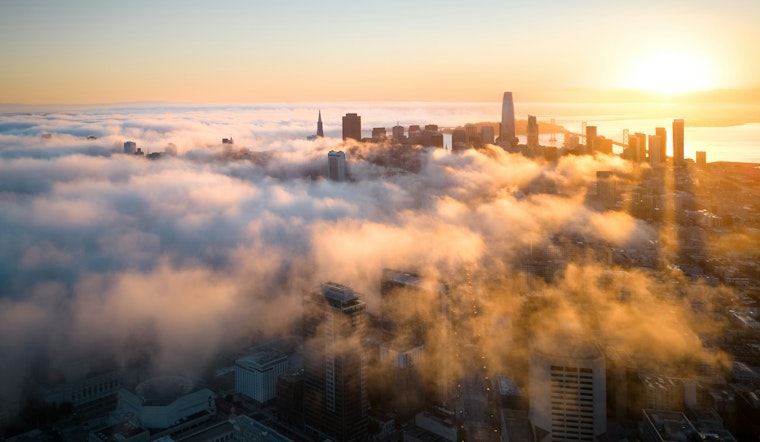
San Francisco residents woke up to that all-too-familiar smoky haze this weekend, courtesy of Oregon's Moon Complex fires—because apparently, wildfire season doesn't respect state boundaries or weekend plans.
The smoky intrusion peaked Saturday evening, sending locals on the familiar hunt for N95 masks and prompting the usual social media chorus of "anyone else smell smoke?" posts across neighborhoods from the Marina to the Mission. While The San Francisco Chronicle reported conditions largely improved by Sunday morning, Hoodline staff were still catching whiffs of smoke as late as 8:30 a.m. Sunday—proving that wildfire smoke operates on its own timeline.
The culprit behind this latest atmospheric invasion? The Moon Complex fires in southwest Oregon, which sparked from lightning on September 3 and have been steadily growing ever since. These aren't your garden-variety brush fires—they've forced evacuations, closed the iconic Wild and Scenic section of the Rogue River, and according to Oregon State Fire Marshal reports, exploded in size Friday thanks to gusty winds that pushed flames toward homes and critical infrastructure near Agness and Illahe.
Weekend Smoke Report: Mixed Results
The Bay Area Air Quality Management District issued an air quality advisory that stayed active through Sunday, though they stopped short of declaring a full Spare the Air alert—a bureaucratic distinction that matters more than you might think, since it determines whether wood-burning bans kick in. Saturday's smoke reports painted a patchwork picture across the city, with some neighborhoods getting hit harder than others.
Over at The Royale on Post Street in lower Nob Hill, owner Will Weston told reporters Saturday evening that patrons hadn't really noticed anything unusual—a stark contrast to previous wildfire events that had him reaching for protective masks. It's a reminder that wildfire smoke can be remarkably fickle, creating dramatically different experiences just blocks apart.
The improving conditions by Sunday morning came thanks to shifting wind patterns, as National Weather Service meteorologist Nicole Sarment explained to The Chronicle: "There's onshore flow, but also ahead of a storm there's southerly flow. The winds from the south (send) the smoke back up to the source region." Translation: Mother Nature gave us a temporary reprieve, but she's not making any long-term promises.
The New Normal Nobody Asked For
This latest smoke event underscores what's become an uncomfortable reality for Bay Area residents: we're essentially downwind from half of the American West during fire season. While San Francisco might not burn itself, according to city health reports, we've become increasingly vulnerable to distant blazes, especially when they coincide with those notorious fall Diablo Winds.
The city's greatest hits of smoke events read like a disaster playlist: the 1991 Oakland Hills Fire, 2017 Napa/Sonoma Wildfires, and the 2018 Camp Fire that turned San Francisco into a dystopian hellscape for nearly two weeks. During that Camp Fire event, the city's Air Quality Index topped 250—a level so hazardous it forced school closures and sent residents scrambling for indoor refuges.
The Bay Area Air Quality Management District—which got a rebrand in January 2025, because apparently even government agencies need fresh starts—has developed increasingly sophisticated monitoring and alert systems. But as this weekend proved, smoke doesn't always read the forecast, and conditions can shift faster than your weather app can update.
Health Reality Check
Wildfire smoke isn't just an aesthetic nuisance—it's packed with fine particulate matter and other nasties that hit vulnerable populations hardest. Children, elderly folks, and anyone with respiratory conditions bear the brunt of exposure, even during brief events. According to city health officials, these impacts inevitably fall heaviest on communities already dealing with health disparities.
The Moon Complex, currently sitting at roughly 3,964 burned acres with minimal containment, represents the kind of fire that can send smoke hundreds of miles downwind. The good news? Rain is forecast for Oregon this week, which should help firefighters get a handle on things.
For San Francisco residents, this weekend served as yet another reminder to keep emergency supplies current—N95 masks, air purifiers, and a healthy dose of resigned acceptance that fire season now apparently runs year-round. City officials recommend staying plugged into resources like the EPA's Fire and Smoke Map and signing up for Air District alerts, because the next smoky weekend is probably just a wind shift away.





